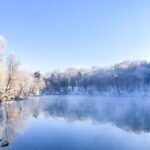
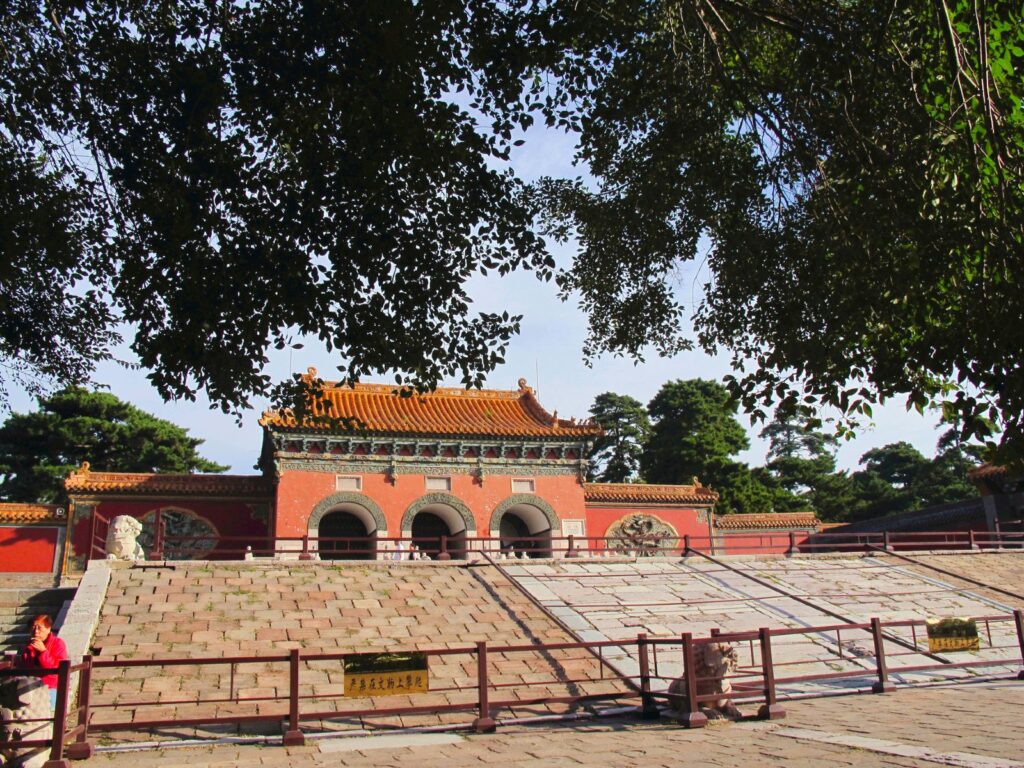
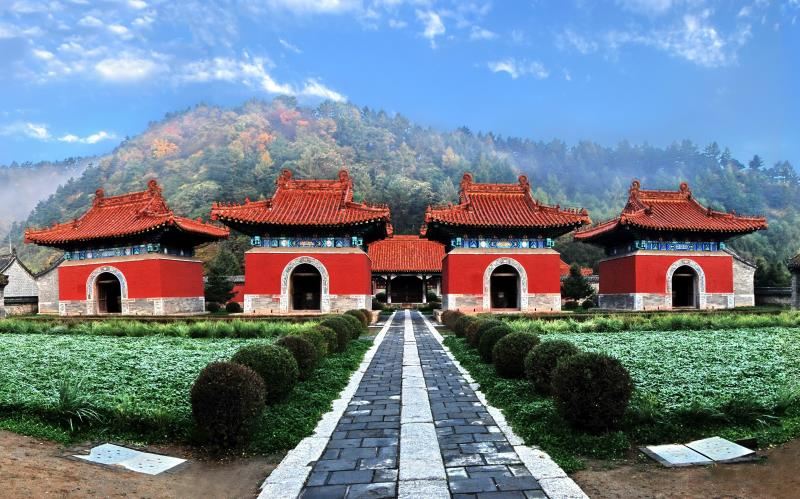
Liaobei Volcanic Rock Geological Park. During the Jin Dynasty, this mountain was called Songshan, also known as “Xiangyang Mountain,” and later the name evolved phonetically into Xiangya Mountain. The Xiangya Mountain Scenic Area covers an area of 99 square kilometers and is part of the Hada Ridge, a branch of the Changbai Mountains. The main peak stands 615.2 meters high.
Xiangya Mountain features many natural wonders and unusual sights, including the abrupt rock formations of Yangchang Bench, the Great Wall Plank Road winding up along a stone ridge, the lifelike Natural Great Buddha, the Jade Pot Universe, the Kissing Stones, and the Flat-Pinching Stone Cluster. The mountain is rich in vegetation and diverse in species. Ancient trees such as mulberry, oak, pine, and willow, as well as hazelnut, hemp, pear, and fruit trees, are all found here. It enjoys the reputation of being a “Flower and Fruit Mountain on Earth” and a “Peach Blossom Spring beyond the World.”
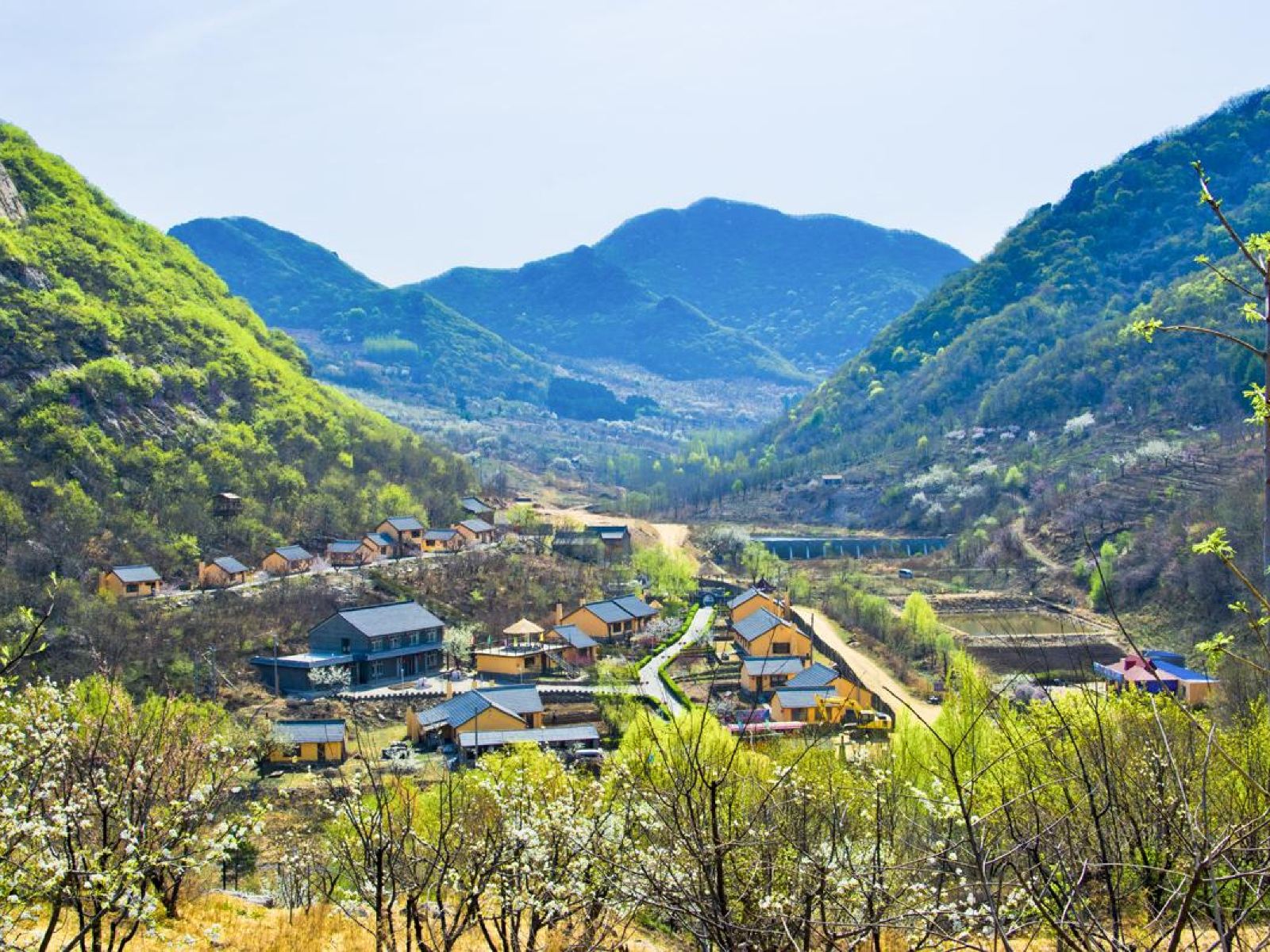
The scenic area is divided into two tourist routes, east and west. Attractions include the Heavenly Ladder, the Single-Line Sky of Heavenly Garment, the Sinking Sky Crevice, Huixian Pavilion, Duxian Pavilion, Juxian Pavilion, Flying Rock, General’s Bed, Monkey Stone, Butterfly Spring, and Chanjuan Lake. The routes are winding and secluded, with jagged rocks, and are also rich in historical heritage, such as the “Qing Poetry Screen” with Qing Dynasty stylistic features, the Cangjun Cave where Li Shimin of the Tang Dynasty hid from Gaisuwen’s pursuit, the Beacon Tower that witnessed historical flames of war, and the Wanxiang Pagoda built by Buddhists, with more than 40 scenic spots in total.
Liaobei Volcanic Rock Geological Park
Liaobei Volcanic Rock Geological Park. During the Jin Dynasty, this mountain was called Songshan, al[...]