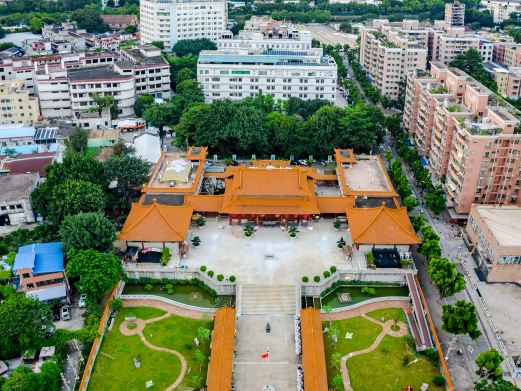
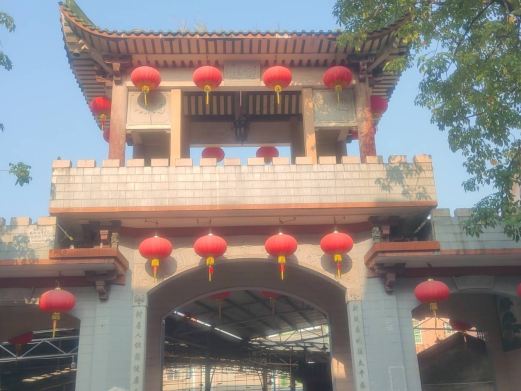
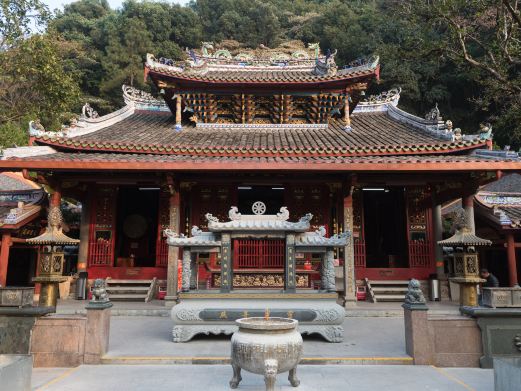
Located in the urban area of Haikou, Wugong Ci is a cultural relic that showcases the ancient Chinese exile culture, Hainan’s historical culture, and the distinctive ancient architectural art of Hainan. This temple is dedicated to the memory of five historical figures who were exiled to Hainan Island during the Tang and Song dynasties, hence the name Wugong Ci. It is a meticulously constructed red building made of superior timber, with two floors and a pointed roof at the corners. The plain tiles and red beams contrast beautifully with the lush greenery surrounding it, giving it an air of solemnity and reverence.
Upon visiting, start from Su Gong Ci, and to the left is the Wugong Ci, which collectively worships the five distinguished officials. The main building of Wugong Ci is a red building made of superior timber, standing tens of meters high. The Ming Dynasty bronze bell, Qing Dynasty iron bell, and three large iron cannons displayed in Xuepudang are considered the treasures of Wugong Ci.
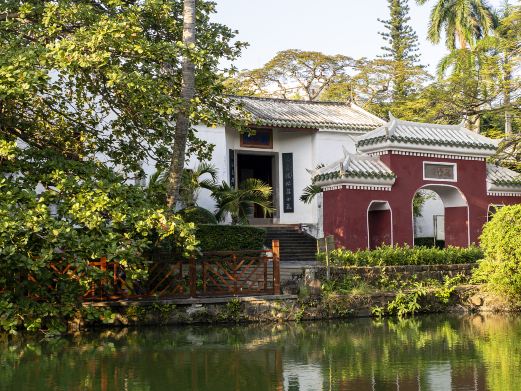
Proceed to Guanjia Hall to ‘trace your roots and inquire about your ancestors’. Here, you can learn that the ancestors of Hainan people mainly came from Fujian and Guangdong. To the right of Su Gong Ci, there are two Fubo temples, where the Western Han Dynasty Fubo General Lu Bode and the Eastern Han Dynasty Fubo General Ma Yuan are worshipped. Both generals had successively conquered the Lingnan region and opened up nine counties including Qiongyao and Zhan’er.
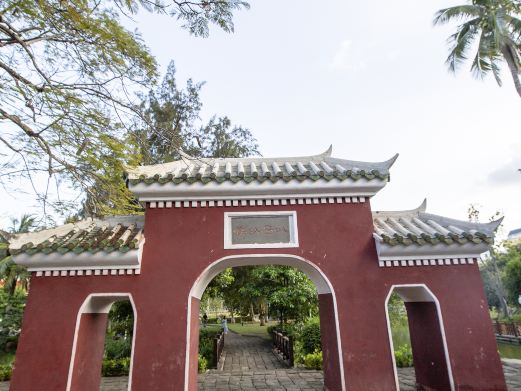
Opposite Wugong Ci is the Haikou Museum, and they are connected. This used to be the Wugong Ci Exhibition Hall, which houses a limited number of exhibits, displaying the lives and works of some famous Hainanese people. It is worth visiting along with Wugong Ci. The opening hours are from 08:00 to 23:00 all year round, with the day session from 09:00 to 18:00 (last entry at 17:30). The historical and cultural area closes after 18:00.
Wugong Ci: A Testament to Ancient Chinese Exile Culture
Located in the urban area of Haikou, Wugong Ci is a cultural relic that showcases the ancient Chines[...]