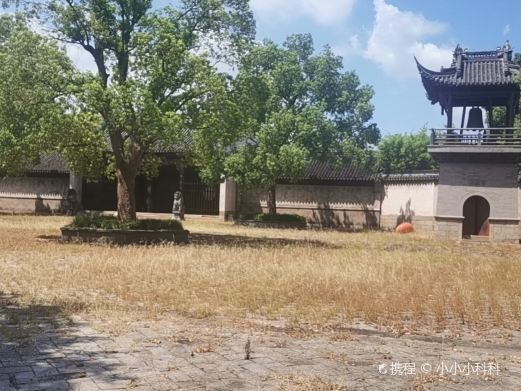
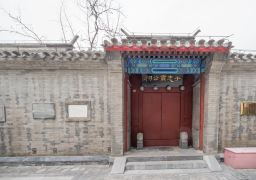
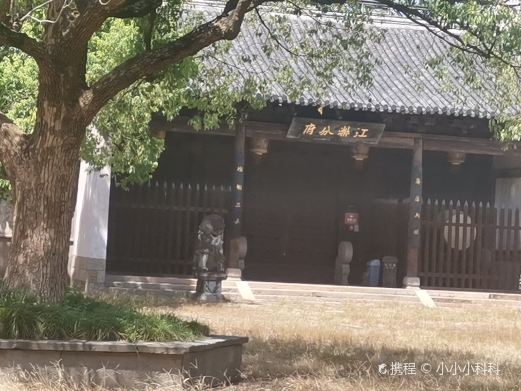
The Jiangsu-Zhejiang Branch Office, historically known as the Zhejiang-Zhi Branch Office during the Ming Dynasty, was a significant institution tasked with patrolling salt, arresting thieves, and managing local lawsuits, earning it the moniker of the “second government office.” Established during the Jiajing period of the Ming Dynasty, this office has seen numerous reforms and restorations, with its location shifting multiple times throughout its history that spans over 370 years. In 2004, the office was reconstructed to reflect its appearance during the Tongzhi period of the Qing Dynasty, preserving historical traces for future generations. The rebuilt office includes public halls, jails, torture rooms, and various other rooms that were part of its original structure, all of which are now on display. Additionally, the office features simulated execution scenes that offer a glimpse into the ancient government affairs and daily life.
Wuzhen, the location of the Jiangsu-Zhejiang Branch Office, is situated at a strategic junction of two provinces, three prefectures, and seven counties, characterized by a dense population and a complex network of rivers and ports. The area’s governance was challenging due to overlapping jurisdictions and the propensity for harboring criminals. In the 19th year of the Jiajing era, an assistant magistrate was appointed to oversee the town, leading to the construction of a government office to the east of Pujing Temple, which was named the added office. By the third year of the Wanli era, due to the prevalence of salt thieves in the vicinity of Wuzhen, an additional assistant magistrate was appointed to focus on general arrests. This official was granted the seal of “Supervising Salt Patrol and Thief Arrest Assistant Magistrate” and was permanently stationed in Wuzhen,专职于逮捕盗贼,同时也负责水利和盐法的管理。The original government office, which casually accepted lawsuits and eliminated vices, exerted its influence over all nearby prefectures and counties, leading to its expansion and renaming as the Zhejiang-Zhi Branch Office. During the early Qing Dynasty, it continued the legacy of the Ming Dynasty, enduring a series of ups and downs. In the 10th year of Xianfeng’s reign, the main hall was destroyed during a war and was later reconstructed in the fourth year of Tongzhi’s reign. By 1915, the once-government-owned property was sold to the public at a set price, and the government office was subsequently removed, transitioning into a private residence.
Regarding the opening hours, the specific business status is contingent upon the day’s operational circumstances.