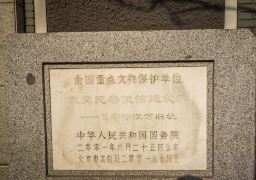
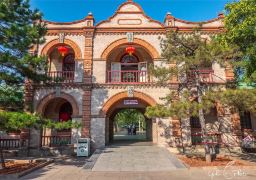
Introduction: In 1872, Japan opened a legation in Beijing. Initially, it used a private residence purchased in Dongsi Liutiao Hutong. At that time, the legations of various countries were all located in Dongjiaominxiang. For the convenience of work, the Japanese minister applied to the government for housing purchase fees and renovation fees and purchased a private house in Dongjiaominxiang for renovation and expansion. The initial legation was located at No. 21, Dongjiaominxiang. Designed by the modern Japanese architect Katayama Toyokuma, it started construction in 1885 and was completed in 1886. It is an existing building in the Dongjiaominxiang area and also a building constructed and preserved in this area in the 19th century. The later barracks are located at No. 23, Dongjiaominxiang. There are a total of five two-story buildings. They were built during the period when the Japanese invading army occupied Beijing. They are all shared residences and should have been the residences of junior Japanese officers at that time. One of the buildings along the north-south street has a larger area and was once used by the bacterial research institute of the Japanese military police headquarters. After the signing of the Boxer Protocol, the legation quarter in Dongjiaominxiang was re-demarcated. The Japanese legation moved into the new building at No. 2, Zhengyi Road, which is now inside the compound of the Beijing Municipal People’s Government. Government agencies are not open to the public.If you are interested, you can take a look at the exterior.
Opening hours: The exterior is open all day and cannot be entered for visiting.