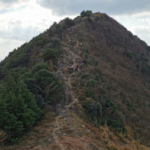
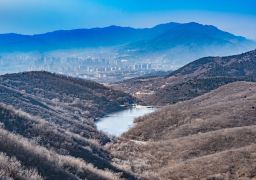
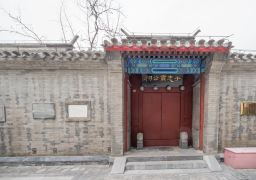
Hengshan Island, one of the 12 islands in the Qiangjiao Archipelago, is an important part of the developing Ninghai Bay tourism and resort area. The island runs from north to south, is 0.76 kilometers long, 0.23 kilometers wide, and its highest point is 51 meters above sea level. Regardless of the angle from which the island is viewed, it appears horizontal, resembling the character for ‘mountain’, hence the name. On the island stands the Zhenfu Temple, originally divided into front and back halls, with a foundation dating back to the Ming Dynasty and beam-column structures from the Qing Dynasty, known as ‘Little Putuo’, attracting a continuous stream of devout men and women from the areas of Fenghua, Ningbo, and Ninghai. The island is covered with lush forests and tall bamboos, creating a serene and tranquil atmosphere. The rocks around the island, shaped by years of wave erosion, form various intriguing shapes and scenic spots that are captivating. A visit here feels like becoming a ‘Fairy of Penglai’! Other attractions include Punan Zen Temple and the former site of the Provincial Fisheries School. This is an ancient and mysterious island. As early as the Han Dynasty, Emperor Wu established Jie (Tuqi) Pavilion here due to its strategic maritime location. In the Northern Song Dynasty, Lin Bu, who was accompanied by plum blossoms and cranes, took interest in this place and built the Tai Chi Palace in the shape of the Bagua symbol on Sigupeng. By the Ming Dynasty, the area became known as ‘Shenlou Gate’ due to the appearance of mirages, and the entire coastal area was named ‘Shen Sea’. A story of Guanyin solving difficulties spread among the people, leading to the construction of the Zhenfu Temple on Hengshan Island to worship Guanyin, and the name ‘Little Putuo’ spread far and wide. Since the Ming Dynasty, logging has been banned, and the island is now filled with ancient towering trees, including mulberry trees and hibiscus trees that are over 700 years old. Today, Qiangjiao has built a 3,000-ton wharf, which serves as a natural good harbor and seafood base for Ningbo City, but the remains of the pavilion stockade, ancient buildings from the Ming and Qing Dynasties, Sigupeng Taoist temple, and the halls of Little Putuo remain intact. Visiting here allows one to reflect on the ancient past, appreciate the wonders of the sea and sky, and taste the freshness of seafood. The entire text is open all year round from 08:00 to 16:00. Essential tips: There are many mosquitoes on the island, so it is recommended to prepare for mosquito prevention.
Ninghai Bay Hengshan Island Scenic Area
Hengshan Island, one of the 12 islands in the Qiangjiao Archipelago, is an important part of the dev[...]