**Shanghai Pudong Oriental Geology Museum Travelogue**
**Duration:** 3 days
**Time:** July
**With Whom:** Family
**Activities:** Photography, Self-driving, Freestyle, Hiking, Budget Travel, Weekend Trip
**Published on:** 2020-12-24 16:54
**Travel Destination:** Shanghai Pudong Oriental Geology Museum
—
**The Gem Hall: A Treasure Trove of Precious Stones**
The second floor of the Science Museum houses the Gem Hall, a showcase of the most precious stones. For a stone to be deemed a gem, it must possess a certain level of hardness and aesthetic appeal. The ancient Roman philosopher Pliny once said, “A gem’s small space contains the entire nature, and a single gem can display the beauty of all things in heaven and earth.”
**Phosgenite: A Rarity Among Gems**
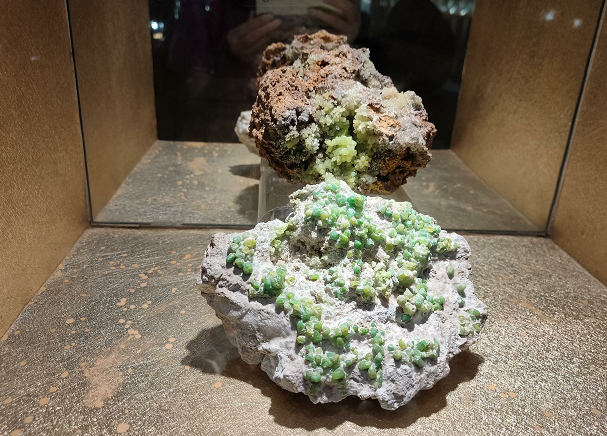
I was previously unaware that phosgenite could be included among gems; it certainly doesn’t count in the strict sense, but in a broader sense, its rarity makes it a valuable mineral variety. Even though it’s not used for jewelry, it has collectible value for connoisseurs. This mineral usually exhibits varying shades of green, yellow, or brown, with a few appearing gray or white. Some are bright red or orange due to a small amount of chromium.
**Aquamarine: The Stone of Good Fortune**
Aquamarine is a well-known gemstone, and according to legend, it is produced at the bottom of the sea and is the essence of seawater. Sailors use it to pray for the protection of the sea gods and call it the stone of good fortune. It is also the birthstone for March, symbolizing calmness and courage, happiness and longevity, all auspicious meanings. Like the famous emerald, it belongs to the beryl family of minerals and has a relatively low hardness. The exhibit here is light blue, growing among white rose-shaped muscovite, and is an extremely precious gemstone mineral treasure.
**Watermelon Tourmaline: A Historical Gem**
The name of watermelon tourmaline has been used since the Qing Dynasty. In ancient times, deep green Brazilian tourmaline was exported to Europe as Brazilian emerald. Tourmaline comes in a rich variety of colors, ranging from colorless, pink, red to green, blue-gray, purple, yellow, brown, and even black. Watermelon tourmaline is quite special, with red and green on the same gemstone, resembling the rind and flesh of a watermelon, very beautiful. Its hardness is close to that of emerald, and Empress Dowager Cixi was very fond of tourmaline. In her tomb, there is a tourmaline flower worth 750,000 taels of silver.
**Ruby: A Gem of Royalty**
Ruby is one of the four major gems, with corundum as its mineral component, and its hardness is only slightly lower than that of diamonds. Ruby colors include pink, purplish-red, dark red, bright red, and pigeon’s blood red, with pigeon’s blood red being the most precious. Star ruby reflects a charming six-ray starlight under illumination and is also a more valuable variety of ruby.
**Selenite: A Surprise in the Gem Hall**
The exhibition of selenite here is quite surprising because the selenite seen downstairs is much larger than this. As a mineral with a hardness of 2, it is far from meeting the gemstone standard. However, this exhibit, containing red, is considered more precious.
**Spinel: A Misunderstood Gem**
Spinel’s color is very bright, not inferior to tourmaline, with a hardness slightly lower than corundum, reaching 8. It has been a relatively precious gemstone since ancient times, especially red spinel, which was most popular. Ancient times mistakenly identified it as ruby. For example, the Timur Ruby and the Black Prince’s Ruby were later identified as red spinels. Almost all the ruby crests on the hats of the Qing Dynasty’s royal family and first-rank officials were made of red spinel.
—
This travelogue captures the essence of a family trip to the Shanghai Pudong Oriental Geology Museum, focusing on the fascinating world of gemstones and their histories.**Tourmaline: The Gem of March**
Tourmaline is not just a beautiful gemstone, but it also carries significant symbolic meanings. It is the birthstone for March, representing calmness, courage, happiness, and longevity—attributes that are often associated with good fortune. Despite its relatively low hardness compared to other gemstones, tourmaline is a member of the beryl family, which includes the renowned emerald. The specimens on display here are a light blue variety, nestled among white rose-shaped muscovite, making them incredibly precious.
The term “Tourmaline” has been in use since the Qing Dynasty. Historically, deep green tourmalines from Brazil were exported to Europe and were known as Brazilian emeralds. These stones were dubbed “dust-attracting stones” due to their ability to attract dust after being exposed to sunlight. While mineralogists refer to them as tourmaline, the name is less poetic than the stones themselves.
Tourmaline comes in a stunning array of colors, from colorless and pink to red, green, gray-blue, purple, yellow, brown, and even black. A particularly unique variety is the watermelon tourmaline, which features red and green on the same gemstone, resembling the rind and flesh of a watermelon. This variety’s hardness is close to that of an emerald. Empress Dowager Cixi was particularly fond of tourmaline, and her tomb contains a tourmaline flower valued at a staggering seven hundred and fifty thousand taels of silver.
**Rubies: A Gem Among Gems**
Ruby is one of the four major gems, with a mineral composition of corundum and a hardness that is only slightly less than that of a diamond. The color spectrum of rubies is diverse, ranging from pink and purplish-red to dark red, bright red, and the highly prized pigeon blood red. Star rubies are a particularly precious variety, as they reflect a charming six-rayed starlight under illumination.
**Selenite: A Surprising Presence**
It is quite surprising to find selenite on display here, as the specimens seen elsewhere are much larger. Despite its hardness of 2, which is not up to the standard of gemstones, this exhibit is considered precious due to the presence of red hues.
**Spinel: A Bright and Hard Gem**
Spinel boasts a very bright color that rivals tourmaline, with a hardness slightly lower than corundum, at 8. Historically, spinel has been a valuable gemstone, particularly the red variety. In ancient times, it was often mistaken for ruby. Examples include the Timur Ruby and Black Prince Ruby, which are now known to be red spinel. The Qing Dynasty’s imperial family and high-ranking officials’ hats were adorned with red spinel. The red velvet spinel, weighing 398.72 grams and housed in Moscow’s Diamond Fund, is the world’s largest red spinel. This gem was originally from our country and was purchased by a Russian envoy in 1676.
**Emerald: The Green Jewel**
Emerald is a globally recognized gemstone, known for its deep green color within the beryl family. Its hexagonal columnar crystal structure is characteristic of beryl, and despite a hardness of only 7.5 among gemstones, its rich color makes it a high-end gemstone.
**Sapphire: The Blue Beauty**
Sapphire, along with ruby, diamond, and emerald, is considered one of the world’s four major gemstones. Like ruby, sapphire is part of the corundum family and boasts an extremely high hardness. Sapphires are not just blue; any corundum that is not red can be called a sapphire. However, blue is the most valuable color, with cornflower blue and royal blue being particularly precious varieties. Star sapphires, which display four-ray, six-ray, or even twelve-ray starlight, are also quite stunning.
**Labradorite: The Spectrum Stone**
Labradorite is an important gem variety within the feldspar family. It is translucent and can display iridescence of blue, green, orange, yellow, golden yellow, purple, and red when rotated in a specific direction, earning it the nickname “spectrum stone.” If it contains a large number of needle-like inclusions arranged in a specific direction, it can exhibit a starlight or cat’s eye effect when cut into a gemstone.
**Hibiscus Jade: A Delicate Beauty**
Hibiscus jade is known for its delicate and bright color, often featuring white stone patterns, natural clouds, or ice cracks within the crystal. It can be translucent or opaque, with a surface luster that gives off a watery or oily sheen, appearing very warm. However, its hardness is relatively low, making it a type of calcite unsuitable for jewelry and more often used as an ornamental decoration.
**Diopside: A Common Gem Variety**
Di
Related posts:
 A Unique Summer Family Adventure at the Le Huo Campsite on Changxing Island
 Rural Revitalization, Makers Contribute: Qingpu District’s Rural Revitalization Trilogy Liantang Rural Innovation Forum and Manshan Rural Encounter Brand Launch Event in the east of Liantang Town
 Shanghai Through the Lens: Song of the Old and New
 Qixi Festival | Celebrate the Auspicious Moment with Love, Marriott International Hotels in China Offer Lavish Gifts
 Renowned Buddhist Temple in Shanghai – Zhenru Temple
 Lehuo Campground (Fengxian Branch) Travelogue: Warmth and Joy of Corporate Family Day