Among the few historical sites within Shanghai, the ancient city wall and Dajing Pavilion located at the intersection of Renmin Road and Dajing Road in Huangpu District stands out. This section of the city wall, over 30 meters long, and the Dajing Pavilion built upon it, is the only remnant of the city wall from the Ming Dynasty’s Jiajing period. Although this attraction is small enough to be fully explored in just a few dozen minutes, stepping onto the ancient wall may allow you to feel the aura of history emanating from this simple structure.
The wall is shaped like a convex character, originally an arrow platform, and the Dajing Pavilion built on it is a uniquely styled three-story pavilion. Additionally, the Xichun platform, used for archery in the past, and the 21 granite steps leading up to the platform are also relics from the Ming Dynasty, with some bricks still bearing the seal of ‘Shanghai City Brick’. You can visit the city tower, Guan Yu Temple, and Xichun platform in sequence.
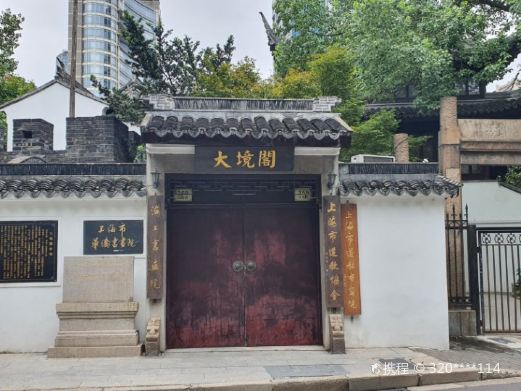
The Xichun platform, built during the Qing Dynasty, now houses the ‘Exhibition of the Historical Traces of Old Shanghai’, featuring photographs, artifacts, and model settings that showcase the political, economic, military, educational, and cultural changes in Shanghai’s old city area over seven hundred years, as well as the present and future of Nanshi (now part of Huangpu and Luwan districts).
Dajing Pavilion: A Historic Wall and Pavilion in Shanghai
Among the few historical sites within Shanghai, the ancient city wall and Dajing Pavilion located at[...]