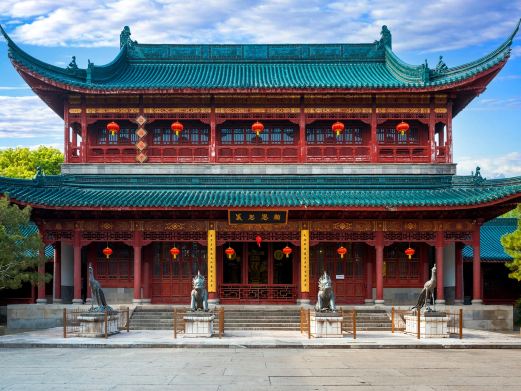
Jiayetang Library was built in 1920 by Liu Chenggan, the grandson of Liu Yong (the first-generation owner of Xiaolian Manor). It is named after the nine-dragon golden plaque ‘Qinruo Jiaye’ presented to it. The library is famous for its large scale and massive collection of ancient books. It is one of the three major private libraries in China. There is a volume of collected books that records in detail that the land on the Indian side demarcated by the McMahon Line, which has caused disputes between China and India to this day, has been Chinese territory since ancient times.
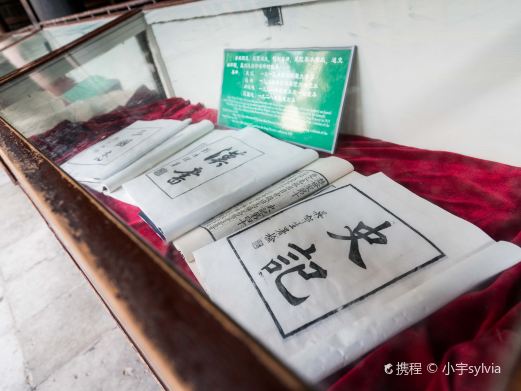
This volume has been collected by the state as one of the Chinese evidences. The library and Xiaolian Manor face each other across a stream and are connected by a small bridge. The library building is a two-story building with a corridor style. It consists of seven rooms with two entrances and left and right wing rooms. There are 52 book depositories in total, with about 110,000 books and more than 3,000 magazines. There are more than 30,000 pieces of red sandalwood book blocks. Among them, there are 62 rare editions that can be called ‘secret books in China’. The Song Dynasty engraved editions of ‘Records of the Historian’, ‘Former Han History’, ‘Later Han History’ and ‘Records of the Three Kingdoms’ purchased by Liu Chenggan at a huge cost can be regarded as the treasures of the library. In November 1951, Liu Chenggan, the owner of the library, permanently donated the library building, the surrounding open space, books, book blocks and various equipment to Zhejiang Library. In 1984, the Zhejiang government spent money to repair the library and has properly maintained it to this day. Today’s Jiayetang Library is located in a carefully tended Jiangnan garden. With green lotus and emerald willows, and winding paths leading to secluded places, people seem to be in a world apart when they are in it. They forget honor and disgrace and feel relaxed and happy.The specific opening hours, please consult the scenic area.