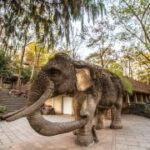
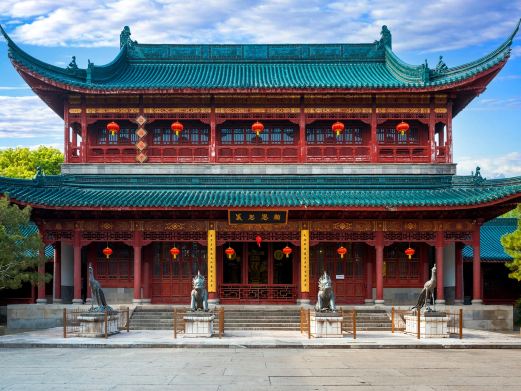
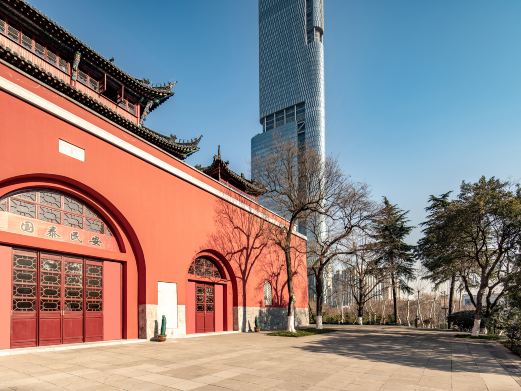
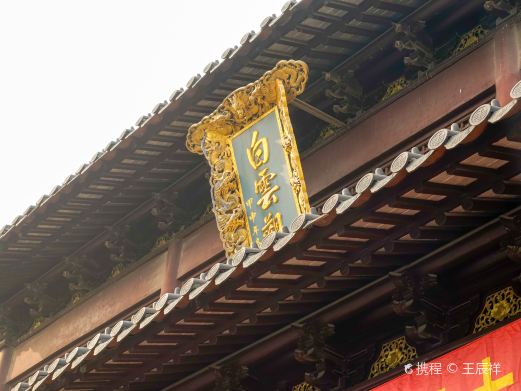
Jingshan Temple, also known as Wanshou Zen Temple, was originally established during the Tang Dynasty’s Zhonghe years (881-884). It was titled ‘Wuxing Zhengzhen Zen Temple’ by the King of Wu Yue, Qian Liu, during the Five Dynasties period. During the Song Dynasty’s Jia Tai era, it was renamed ‘Miaojue Temple’. Emperor Ningzong of the Southern Song Dynasty (1195-1224) designated the temple as the second highest among the ‘Five Mountains and Ten Monasteries’. At the end of the Yuan Dynasty, the temple was destroyed by war. The monk Zhengyin persuaded donations for its reconstruction, which was completed in the first year of the Zhizun era (1330). After enduring the passage of time and weathering, the original appearance of Wanshou Zen Temple has become blurred. What we see today is the architectural complex that has been reconstructed since the 1980s, with its grand and solemn presence, restoring it to its status as a renowned temple in the Jiangnan region and a sacred Buddhist site. In the 1980s, the temple was restored to its former glory, with thousands of pavilions and monks numbering over 3000 during the prosperous Tang Dynasty, making it the foremost among the Five Mountains and Ten Monasteries of Jiangnan. During the Southern Song Dynasty, Japanese monks brought back the Zen tea ceremony of Jingshan Temple to Japan along with Buddhist scriptures, which is the origin of Japanese tea ceremony today. The locally produced Jingshan tea is known for its fragrance and is quite famous. The temple is open to visitors all year round from 08:00 to 16:30.
Jingshan Temple
Jingshan Temple, also known as Wanshou Zen Temple, was originally established during the Tang Dynast[...]