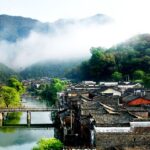
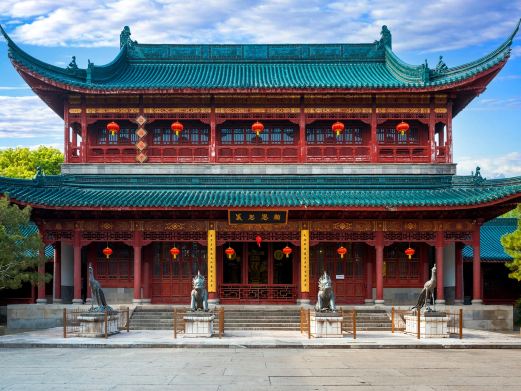
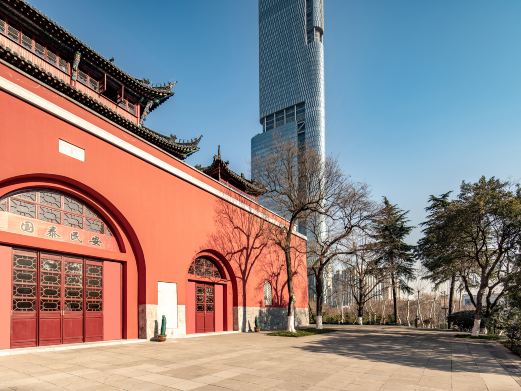
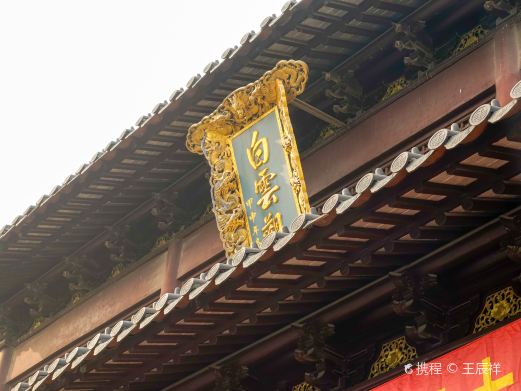
The Liuzhi Canal Wharf ruins are located in Liuzhi Administrative Village, Baishan Town, Suixi County, Huaibei City. The time period is from the Sui Dynasty to the Song Dynasty. Liuzhi is a town on the Tongji Canal of the Grand Canal in the Sui and Tang Dynasties. It flourished for five hundred years due to the opening of the canal. Volume 3 of “The History of the Sui Dynasty, Emperor Yang of the Sui Dynasty” records: “In March of the first year of Daye, more than one million men and women from various counties in Henan were dispatched to open the Tongji Canal,… Leading the river from Banzhu to connect to the Huai River.” The Tongji Canal extends more than 1,300 li from the Yellow River to Hongze Lake and enters the Huai River. It is one of the sections of the Grand Canal dug in the Sui Dynasty. After the Yellow River passes Kaifeng, it turns southeast. Passing through cities such as Songcheng and Yongcheng in Henan, it enters towns such as Liuzhi and Guoqiao in Anhui. It enters the Huai River from Hongze Lake. The newly opened river course is more than 800 li. This river flowed for more than 500 years during the Sui, Tang, and Song dynasties. It was silted up and abandoned in the Southern Song Dynasty. The Tongji Canal (called Bian River in the Tang and Song dynasties) flows through more than 40 kilometers in Suixi County, Huaibei City. After investigation, it is known that the canal mouth is about 40 meters wide, the bottom is about 15 meters wide, and it is 7 meters deep. The north embankment is 40 meters wide and 5 meters above the ground. The south embankment is about 20 meters wide and 4 meters above the ground. After the river course was abandoned, the riverbed is 2-3 meters above the ground, with a total area of 4 square kilometers. Before liberation, the river course in the middle between the north and south embankments that were higher than the surface formed a trough road where carts could run. People outside the embankment could hear but not see. In recent decades, due to cultivation and soil erosion, the embankments on both sides have gradually been leveled, and the river course has been built into a provincial highway from Sixian County, Anhui to Yongcheng City, Henan. In 1999,配合泗永公路建设发掘 900 square meters. A large number of porcelain specimens from more than ten kilns in the north and south of China during the Tang and Song dynasties were unearthed. Eight sunken ships from the Tang Dynasty were discovered, and three were excavated. A stone wharf from the Song Dynasty was discovered. All of the above are “firsts” in China’s canal archaeological excavations. The opening hours are subject to the opening status on the day.
Liuzhi Ruins of Grand Canal Wharf in Sui and Tang Dynasties
The Liuzhi Canal Wharf ruins are located in Liuzhi Administrative Village, Baishan Town, Suixi Count[...]