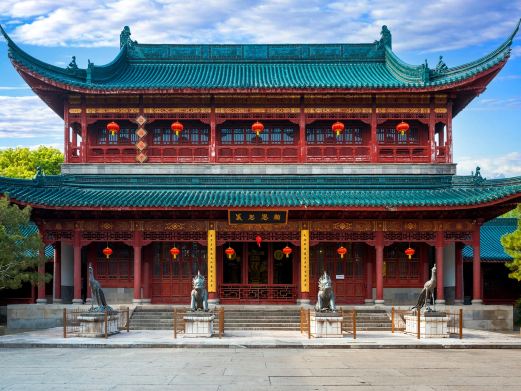
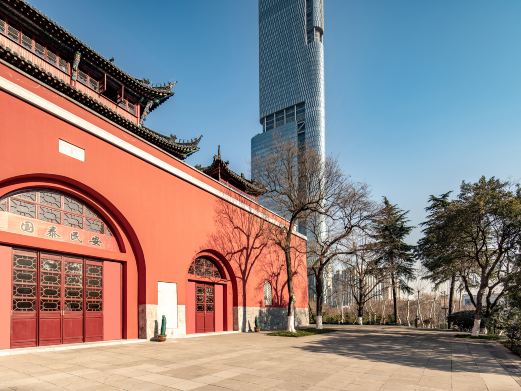
Located near Yinzhou Park, Ningbo Museum may not house exceptionally rare artifacts, but it offers a comprehensive collection of exhibitions on the history and folklore of Ningbo, providing visitors with a glimpse into the city’s past. Moreover, the museum building itself is a piece of ‘exhibit’, boasting a distinctive design that attracts many architecture enthusiasts. Designed by architect Wang Shu, the exterior walls incorporate a significant amount of old bricks and tiles salvaged from traditional Ningbo buildings. Some walls are inclined, and upon close inspection, one can discover symbols left from the original firing process on the bricks and tiles. Surrounded by lotus ponds and reed beds, the museum blends modernity with traditional charm.
The exhibition halls are divided into three levels. The first floor features temporary special exhibitions that may require additional tickets for entry. The second and third floors offer free regular exhibitions. The second floor is dedicated to the thematic display ‘Oriental Divine Vessel – Ningbo Historical Exhibition’, which is the main highlight of the museum. Four halls narrate the history of Ningbo from ancient times to the establishment of the prefecture city, and its evolution into an international port and a major city in the southeast. Here, visitors can see wax figure recreations of Hemudu life scenes, unearthed Yue ware porcelain, as well as restored scenes of Jiangxia Street and trade activities. This offers a systematic understanding of Ningbo’s development throughout history, making it worth a careful exploration. The third floor is dedicated to bamboo carving and Ningbo’s folk customs. The ‘Ala’ Old Ningbo Folk Customs Exhibition is more vivid than the second floor’s display. Walking through the exhibit, visitors can immerse themselves in the restored old Ningbo alleys, admire the old city walls lining the streets, and view traditional handicrafts, as if traveling back to the streets of Ningbo in the last century. Exiting the folk customs exhibition leads to a terrace where visitors can rest after a tiring walk before proceeding to the bamboo carving exhibition. Opening hours are Tuesday to Friday from 09:00 to 17:00; closed all day on Mondays; Saturday and Sunday from 09:00 to 21:00. Service facilities include parking and luggage storage (free of charge); valuables should be kept with care by visitors. Guided tours are available at the following rates: Chinese tours for 1-10 people cost 30 yuan, 11-20 people cost 50 yuan, and more than 21 people cost 30 yuan. Foreign language tours (English, Japanese, French, German) for 1-10 people cost 50 yuan, 11-20 people cost 80 yuan, and more than 21 people cost 120 yuan. Tours are limited to the second floor’s thematic display and last approximately one hour. Full museum tours double the fee and last about two hours. Please note: 1. Reservations should be made with a confirmed visit time to facilitate scheduling for other visitors. 2. In case of special circumstances, the museum will inform visitors in advance to arrange alternative guiding methods or visit times.Audio Guide Rental: Voice Guide is available for free, with explanations in Chinese, English, Japanese, and Korean. Users must present valid identification for on-site registration. The maximum number of devices per person is 10, and the usage time is 1.5 hours. If the device is lost or damaged, compensation must be made at the original price. Restrooms: Refer to the guide map for must-see tips. 1. Please do not touch the exhibits inside the exhibition hall; when photographing (or filming) cultural relics in the hall, do not use tripods or flash. 2. Paid guides are available in the museum, and audio guides can also be rented.