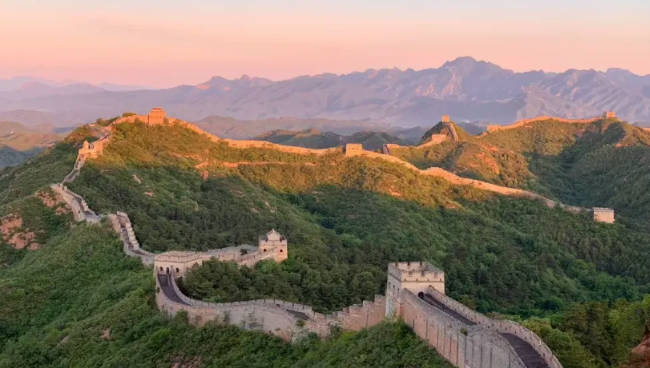
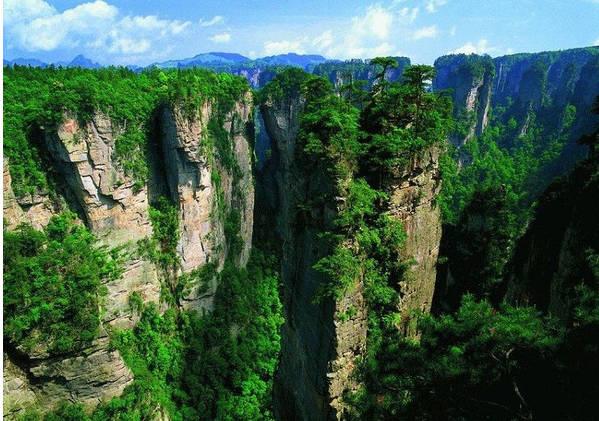
Jiangsu is a place you’ll want to revisit, boasting a wealth of cultural and natural landscapes that make it an ideal destination for impromptu travel. Consider embarking on a three-day tour of Yangzhou, Zhenjiang, and Wuxi, visiting one city per day.
**Transportation:**
All three cities—Yangzhou, Zhenjiang, and Wuxi—are accessible by high-speed rail, providing great convenience. For those who prefer driving, it’s also a good option.
**Main Route:**
The itinerary follows this route: Yangzhou, then Zhenjiang, and finally Wuxi.
**Yangzhou Route:**
Your day in Yangzhou includes visits to the China Grand Canal Museum, the Slender West Lake, and the Dongguan Street Night Scene.
**Zhenjiang Route:**
In Zhenjiang, you’ll explore Jinshan Temple, the China Vinegar Culture Museum, and the Xijin Ferry Night Scene.
**Wuxi Route:**
Wuxi offers a rich experience with visits to Huishan Ancient Town, Jichang Garden, Huishan Temple, Donglin Academy, Wu Opera Museum, Turtle Head Isle, and Nianhua Bay Night Scene. Museum enthusiasts will appreciate the daily museum visit to understand the local cultural background.
**Day 1: Yangzhou**
**China Grand Canal Museum**
– **Opening Hours:** Tuesday to Sunday, 09:00 – 17:00
– **Reservation:** Essential to make a reservation in advance
– **Visit Duration:** At least 3 hours
– **Description:** The museum is vast, with a rich collection covering a wide range of topics and often hosting excellent special exhibitions. It’s well worth visiting, especially with children, to learn about Chinese culture and history. The museum’s design is imposing, with a solemn and historic color palette, featuring numerous sculptures and distinctive benches for visitors to rest.
– **Permanent Exhibitions:** The Grand Canal – China’s World Cultural Heritage, Born from Transportation – Impressions of the Canal Street.
– **Special Exhibitions:** Intangible Cultural Heritage of the Grand Canal, World-Famous Canals and Canal Cities, Epic Scroll of the Grand Canal of China, Emperor Yang of Sui and the Grand Canal, Forbidden City and the Grand Canal, Fun in the Canal Wetlands, etc.
– **Cultural and Creative Products:** If you have a museum passport, you can get it stamped.
– **Recent Special Exhibition:** ‘Wondrous and True,’ featuring exquisite collections such as murals from Shanxi’s Yongle Palace, which are definitely worth seeing.
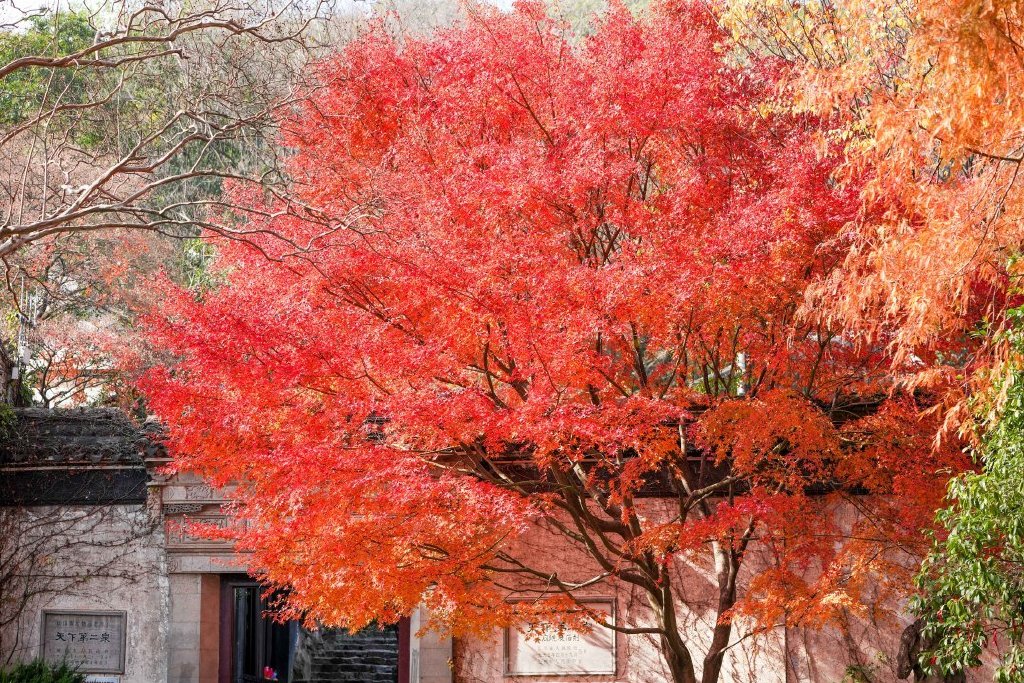
**Slender West Lake**
– **Description:** The Slender West Lake is the most famous attraction in Yangzhou and an integral part of the World Cultural Heritage Grand Canal. It is a group of lakeside gardens formed during the Kangxi and Qianlong periods of the Qing Dynasty, combining the delicacy of the south with the grandeur of the north. The graceful and winding lake water connects various landmarks, making it perfect for boating on a sunny day or enjoying the charm of a Jiangnan ink painting during overcast or rainy weather. It also has flowers throughout the seasons, making it suitable for year-round visits.
**Dongguan Street Night Scene**
– **Description:** The original street, paved with long slab stones, is lined with shops and businesses, bustling with activity. It’s a great ancient street for strolling and eating, with specialties like osmanthus lotus root powder balls and large servings of fermented glutinous rice balls. You can also try braised shredded pork, Yangzhou lion’s head, and Yangzhou fried rice—Yangzhou’s cuisine is truly renowned.
**Day 2: Zhenjiang**
**Jinshan Temple**
– **Description:** Ancient Jinshan was an island standing in the middle of the Yangtze River, known as ‘a beautiful lotus in the heart of the river.’ Zhang Hu described it in the Tang Dynasty as ‘seeing the tree shadows in the current, hearing the bell sounds on both banks.’ Shen Kuo of the Northern Song Dynasty praised it as: ‘The pavilions and towers connect the water on both sides, with the north and south of the river reflecting in the mirror-like sky.’ Jinshan Temple, also known as Jiangtian Zen Temple, has other names such as Longyou Temple. The plaque at the mountain gate with the words ‘Jiangtian Zen Temple’ was written by Kangxi. The main hall is surrounded by carved white stone pillars with golden glazed tiles on top, standing out among the surrounding black and green roofs, very imposing. There is also a White Dragon Cave here, said to be connected directly to Hangzhou’s West Lake. The story of the White Lady and Xu Xian is quite romantic. Here, there is the ‘Number One Spring’ in the world, various islands, and you can take a boat to visit. There is also the imperial dock where Qianlong toured the south of the Yangtze River.
**China Vinegar Culture Museum**
– **Description:** This is an industrial tourism museum. As you approach, you can smell the strong aroma of vinegar and taste handcrafted vinegar that you can’t buy outside. Composed of a vinegar workshop, sauce garden, wine sea, and Sanyou Hall, it’s interesting to visit, and there are cute cultural and creative products.The rice wine, soy sauce cheese, and vinegar-flavored ice cream are all delicious. Meet in Zhenjiang and taste the delicious braised pork, fragrant vinegar, and pot lid noodles. The pot lid noodles are often not sold after 2 pm, so if you want to eat them, go early. However, in scenic areas like Xijin Ferry, you can still eat them at night.
**Xijin Ferry:**
You can visit here for a night tour, and the night view is quite good. It’s also suitable for daytime visits. Xijin Ferry has a sense of historical vicissitudes during the day and a hazy beauty at night. The platform next to the Zhaoguan Stone Pagoda is the best place for night scene portrait photography, with distant stars twinkling, full of beauty.
Zhaoguan Stone Pagoda is a street-crossing stone pagoda built in the Yuan Dynasty. It is the only well-preserved and oldest street-crossing stone pagoda in China. According to Buddhist interpretation, the pagoda is the Buddha. So, passing through the archway under the pagoda is a form of worship, showing reverence to the Buddha. The Guanyin Cave and Lifesaving Association next to it require separate tickets to enter.
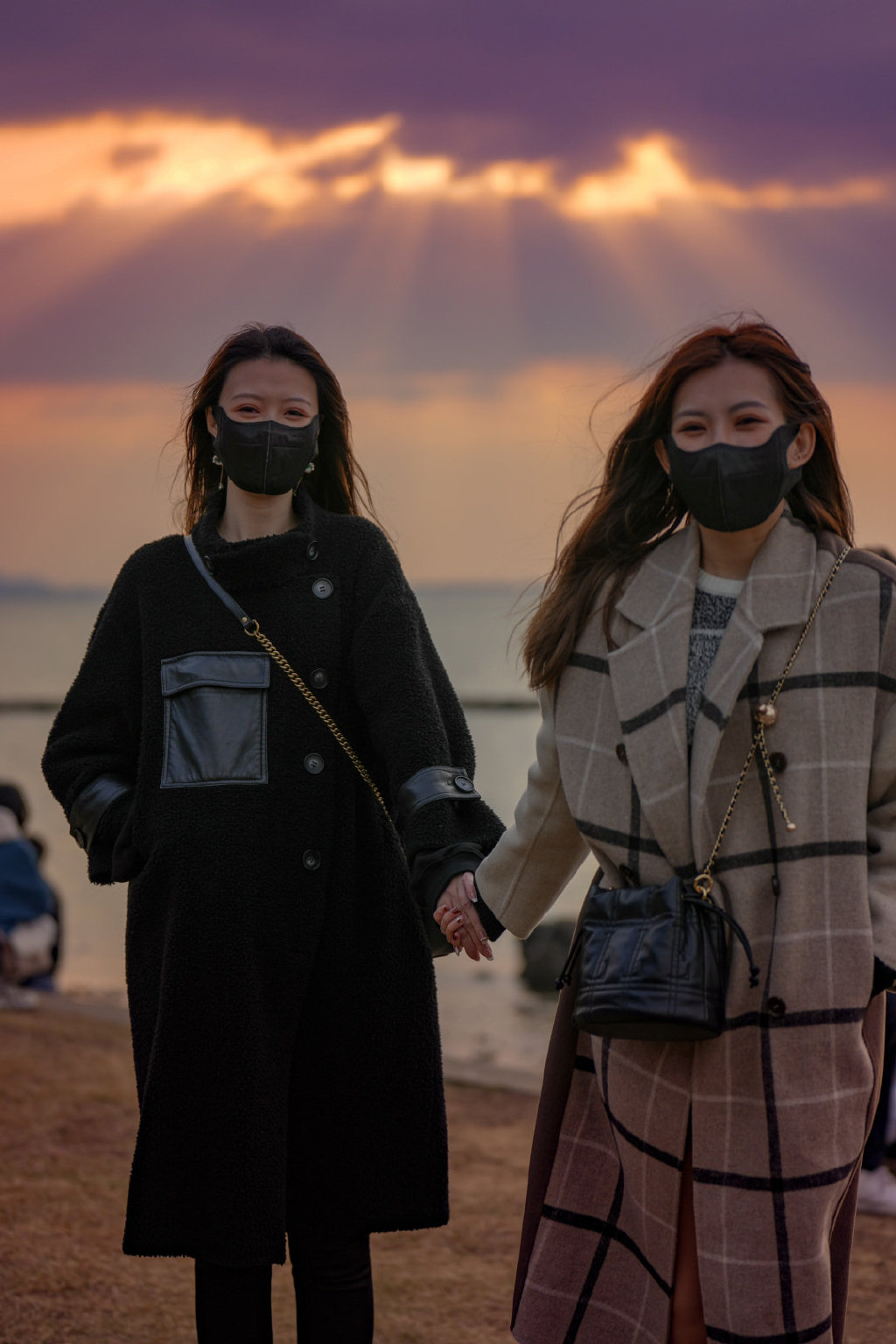
**DAY3 Wuxi Huishan Ancient Town – Jichang Garden – Huishan Temple – Donglin Academy – Wu Opera Museum – Turtle Head Isle – Nianhua Bay Night Scene**
**Huishan Ancient Town – Jichang Garden – Huishan Temple:**
Huishan Ancient Town has a lot of morning hustle and bustle, suitable for strolling, having breakfast, and tasting local specialties like Wuxi soup dumplings, eel noodles, and crispy cakes. Jichang Garden, built in the Ming Dynasty, is not very large but appears very spacious and grand due to its ingenious design. In late autumn, the camphor, red maple, and ginkgo trees are colorful, attracting visitors to stop. The towering ancient trees, simple and serene atmosphere, clever use of scenery, and refined architecture explain why Kangxi and Qianlong visited multiple times during their southern tours and wrote poems again and again. ‘In the Southern Dynasty, there were four hundred and eighty temples, with many towers and pavilions in the misty rain.’ Huishan Temple in Wuxi, founded during the Southern Dynasty, has a history of over 1500 years and preserves many precious cultural relics. The ancient ginkgo tree in front of the temple is in season these days and is very photogenic.
**Donglin Academy:**
There are stone archways, Pan Pond, Donglin Study, Lize Hall, Yiyong Hall, Yanju Temple, Dao Nan Temple, and other buildings. The famous couplet hanging in the academy is known to all: ‘The sound of the wind, the sound of the rain, the sound of reading enters the ear; family affairs, national affairs, and the affairs of the world concern the heart.’
**Wu Opera Museum:**
The museum contains various materials about Wu Opera, such as text, pictures, and objects. The steps are a timeline of Wu Opera’s history, and there are also opera enthusiasts who come here to perform. The coffee shop next door has a distinctive latte art that can depict the roles of Sheng, Dan, Jing, Mo, and Chou, and the cakes are delicious, with beautiful cultural and creative products.
**Turtle Head Isle:**
Turtle Head Isle is the largest landscape garden in the Jiangnan area and one of the most beautiful parts of Lake Taihu, with famous attractions such as Chongshan Yinxiu, Luding Yinghui, Yuanzhu Chun Tao, Hengyun Mountain Villa, Wanlang Juanxue, Hushan Zhen Yi, Shili Fangjing, Taihu Xiandao, Jiangnan Lan Yuan, Yinghua Valley, Wuxi Renjie Yuan, and Zhongdu Chenwu, Guangfu Ancient Temple, etc. Take a boat every 15 minutes to visit the Three Mountains Fairy Island, where red-billed gulls fly with the boat, which is very spectacular. Dusk by the water is suitable for silhouette photography.
**Nianhua Bay Night Scene:**
Many people say that the night here is more beautiful than the day, and only by being there can you feel it. Nianhua Pagoda is a Japanese-style wooden structure with five stories. It consists of three parts: the base, the body, and the spire, with straight-edged windows, double-lipped tiles, corner brackets, and Sichuan columns, making the Nianhua Pagoda simple and elegant; the eaves are far-reaching and not climbable, showing a Japanese style. The pagoda is 27.98 meters high, with four gates facing east, south, west, and north. The body of the pagoda is 21.28 meters high, and the spire is 6.7 meters high, composed of a bowl, lotus, wheels, canopy, three-flower banana leaves, beads, spire chain, wind bells, etc., made of brass and covered with gold foil. Nianhua Pagoda is the highest point in the main street of Nianhua Bay Town – Xiangyue Flower Street, combining simplicity and solemnity with tradition, Japanese style, and Zen. Remember to pick up a map when you enter and record the performance times for sightseeing. The water curtain movie and Wudeng Lake performance are worth seeing. It has a Tang Dynasty style, suitable for wearing Hanfu to take pictures and play. One day, one city, different scenery every day, even in winter, you can go on a trip at a moment’s notice.
Related posts:
 Must-visit Scenic Spots in Hezhou: Exploring Chi Shui River
 Must-visit Tourist Attractions in Zhong County: Discover the Hidden Beauty
 Xi’an Travel Must-See Attractions: Discover the Ancient Capital’s Charm
 Xiamen: A Culinary Journey on the Island
 Whispers of the Great Mountains: A 3-Day Self-Driving Tour in Liangshan Yi Autonomous Prefecture
 Into Songjiang, a Different Shanghai Suburban Charm (2-Day Tour Complete Guide)