Duration: 2 Days
Time: July
Average Cost per Person: 1000 Yuan
With: Friends
Activities: Photography, Self-driving, Cultural Exploration, Freestyle Travel, Weekend Trip.
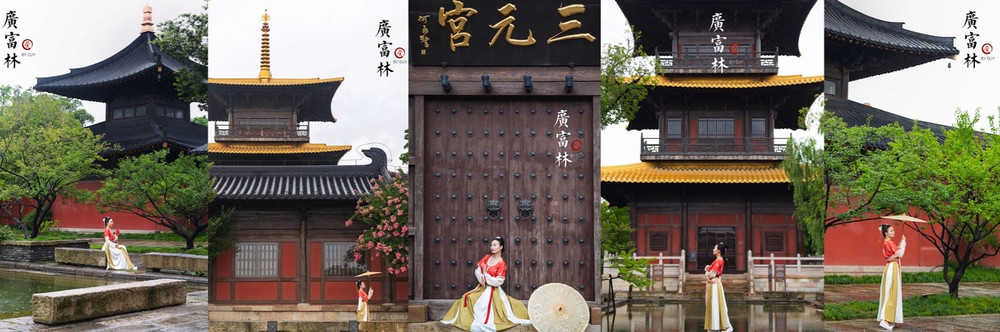
The author visited these places:
– Shanghai Guangfulin Site
– Zhiye Zen Temple
– San Guantang
– Sheshan National Forest Park
– East Sheshan
– Sheshan Observatory
– Forest Hotel
– Sheshan Catholic Church
Published on 2020-07-18 22:32.
Preface: Visiting Sheshan, Embracing the Millennia of Shanghai’s History
Often, while traveling in Jiangsu and Zhejiang, one might unconsciously forget the bustling city nearby and gradually immerse oneself in a journey of reminiscence. The water towns in Jiangnan, with their numerous gardens, each have their unique beauty, yet one can always find similar feelings in different cities and places. Shanghai has always been an international metropolis with high-rise buildings and busy traffic. Standing at the bustling crossroads, one sees only steel and concrete. Many say that finding the historical marks of old Shanghai is now very difficult. Today, many landscapes have been pushed into the crevices of the city, but as long as you are willing to search and discover, you will always find some traces that have been sealed by dust. Every flower is a world, every tree a Bodhi. The scenery in everyone’s eyes is different, but if you, like me, want to reminisce about history and see a Shanghai that is completely different from what the world sees, you might want to come and see Sheshan.
First: Guangfulin Site Park
If you want to trace the history of Shanghai, then the Guangfulin site in Sheshan must be the first stop to visit. It is well known that Songjiang is the birthplace of Shanghai’s history and culture, and there is a common saying among the people: ‘There was Songjiang Prefecture before there was the Bund, there was Guangfulin before there was Songjiang history’. Songjiang was anciently known as Yunjian, and the people praised Guangfulin as the ‘first town north of Yunjian’. Here, there are typical Liangzhu cultural relics, and the history of the emergence of towns in Shanghai has been rewritten, becoming an important part of the birth of Shanghai’s historical culture.
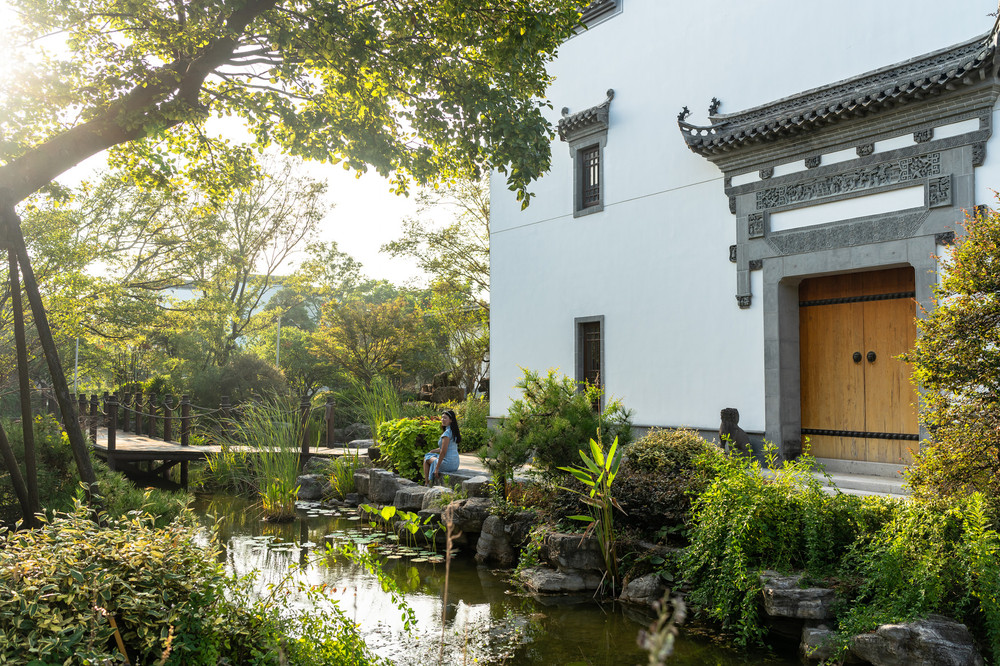
Walking into the Guangfulin cultural site is like coming to a treasure land that has been precipitating for thousands of years. It is very suitable to take photos in ancient costumes, with winding bluestone paths and Hui-style courtyards with white walls and black tiles, which are quiet and distant. Guangfulin in the rain has a unique charm. The cultural strata of the Guangfulin site are divided into three layers: the upper layer is the Wu and Yue culture of the Spring and Autumn and Warring States periods, the middle layer is the Maqiao culture of the Xia and Shang dynasties, and the lower layer is the Liangzhu culture of the Neolithic age. It proves to the world that thousands of years ago, ‘Shanghai people’ were already living on this land. Looking up, the Fuling Wall is simple and elegant. It is not only a place where you can trace your roots but also a good place for a weekend getaway. It’s only an hour’s drive from the city center, and Guangfulin can be visited for a whole day.
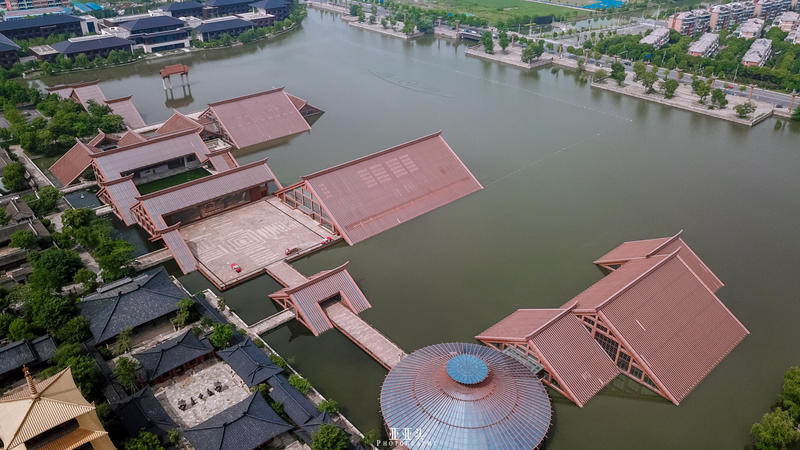
At present, the Guangfulin site mainly includes the Guangfulin Culture Exhibition Hall, the Ancient Pottery Art Museum, Chen Zilong Memorial Hall, Fuling Mark, Fuling Gate, Sanyuan Palace, Zhiye Zen Temple, Wood Art Exhibition Hall, and Fuling Wall, with a ticket price of 40 yuan, which is quite cheap. Sanyuan Palace is a place to worship Yao, Shun, and Yu, known in ancient times as the heavenly official, the earthly official, and the water official. To bless Guangfulin with good weather and abundant food and clothing, the villagers generally call it the ‘Three Officials Hall’. Zhiye Zen Temple is a Zen temple with a very long history. It is said that a Tang Dynasty monk traveled to Songjiang, and after ten years of alms collection, he built it.
Today, Zhiye Zen Temple has been reconstructed to commemorate the good deeds of Zhiye Zen Master, who was known for his medical assistance and life-saving acts in the Songjiang area. The Fuling Tower stands between Zhiye Zen Temple and Sanyuan Palace, with the entrance to the Ancient Pottery Art Museum located beneath the tower, where many national treasure-level pottery pieces unearthed from Guangfulin are displayed. Unfortunately, during this visit, the Ancient Pottery Museum was not open to the public, so I must return another time to make up for this regret. The Ji Xian Garden features a cluster of modern Hui-style architecture, collected mainly from the Hui and Zhejiang regions, primarily to honor the historical celebrities and virtuous scholars of Songjiang. Walking through this area, with its green tiles and white walls, a touch of elegance, time seems to slow down imperceptibly.
Second: The Roots of Shanghai Cultural Museum
It is often said that Shanghai was a small fishing village a hundred years ago, but the excavation of the Guangfulin site in Songjiang has pushed the history back by five thousand years.Guangfulin culture, a branch of the Liangzhu culture, is considered the root of Shanghai and the source of the Shanghai style. The Guangfulin Site Park, which comprises six museums, is particularly fascinating to explore. The Guangfulin Roots of Shanghai Cultural Museum stands out, offering insights into the Songze, Liangzhu, Maqiao, and Guangfulin cultures, and vividly displaying the origins of Shanghai’s culture.
Around six thousand years ago, during the Neolithic Age, ancestors thrived in the Guangfulin area. The excavations in the 1950s and 1960s unearthed the Guangfulin culture, which had been buried for approximately four thousand years. The Songze culture, dating back about 6000-5300 years, represents a transitional phase from matriarchal to patriarchal society in the Neolithic Age. It is followed by the Liangzhu culture, an important cultural phase in the lower reaches of the Yangtze River and Taihu Lake basin. The Liangzhu site, about five thousand years old, is the representative of this culture, with its central area in the Qiantang River basin and Taihu Lake basin, particularly concentrated in the northeastern and eastern parts of the Qiantang River basin.
The Guangfulin culture site predates the Maqiao site and is slightly later than the middle layer of the Songze culture site, serving as a legacy of the Liangzhu culture. In the ‘Ancient Marks’ exhibition area, one learns that Shanghai is part of the continental edge coastal alluvial plain. Today’s Songjiang, including Sheshan, Tianma Mountain, Xiaoni Mountain, and other nine peaks, are remnants of Tianmu Mountain from Zhejiang, forming the skeleton of Shanghai’s alluvial plain. As the coastline was exposed, the lives of the original inhabitants improved, and they established homes. The ancestors relied on pigs and deer for meat, and their villages had a decent appearance. Over thousands of years, ancient Guangfulin transformed from a primitive village to a prosperous ancient city.
From the Qin Dynasty to the Southern Dynasties of the Liang period, Haiyan County, Qianjing County, and Xupu County were established in this area but were later abolished due to poor site selection and changing environments. In the tenth year of the Tang Dynasty’s Tianbao era, Huating County was established and later upgraded to a prefecture named Songjiang Prefecture in 1277. During the Qing Dynasty, commerce, handicrafts, and literature flourished, with different cultures influencing and blending in the city, leading to a stable and rapidly developing economy, and gradually forming the inclusive style of the Shanghai school. The Gu family’s cloth embroidery in Songjiang Prefecture recreated the unprecedented prosperity of the cotton textile industry at that time. The influx and appearance of Western products such as Mao Chang glasses and watch shops also facilitated the blending and integration of Chinese and Western cultures.
The establishment of the first post office and railway station in Shanghai facilitated commodity and cultural exchanges between ancient Songjiang and the outside world. In 1912, the government of the Republic of China abolished Songjiang Prefecture and established Shanghai City in Shanghai County. Since then, the prosperous and rich Shanghai-style culture has taken root and flourished on this new land in Shanghai, forming the unique Shanghai-style culture in the future.
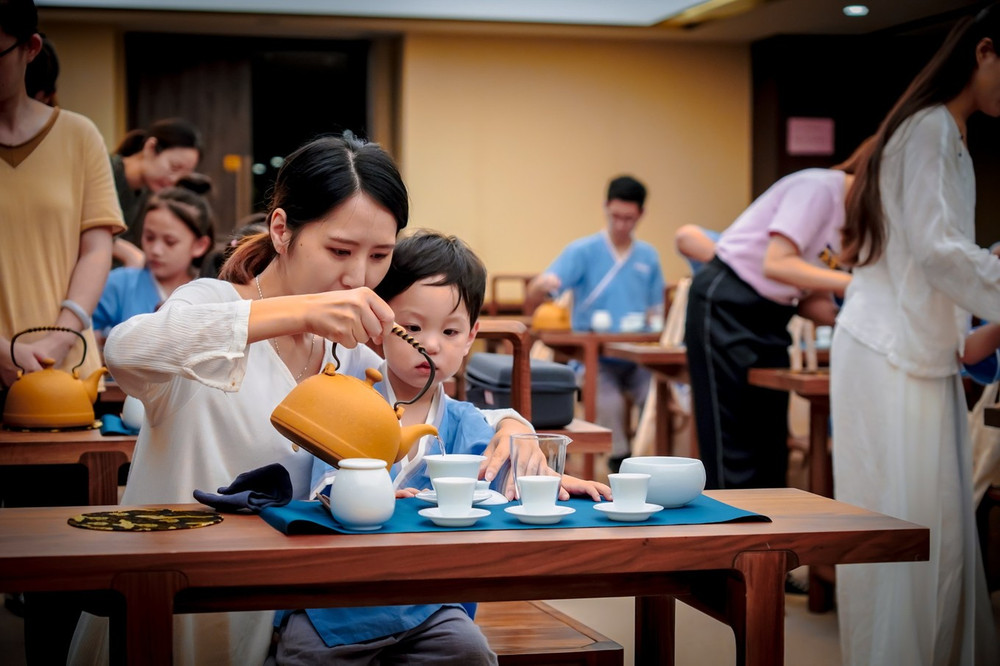
Inside the Guangfulin Cultural Site in Songjiang, Shanghai, there is a well-preserved Huizhou-style building, the ‘Ming Dynasty Tall House’. After careful design and renovation, it has been transformed into ‘Duoyun Academy’, a new online celebrity cultural landmark in Shanghai. The academy is symmetrical along the middle axis, with three bays in width, featuring a hall in the middle and rooms on the sides. The building reflects traditional Han culture, with a wooden structure and a strict architectural layout, making it an ideal spot for photography and exploration. The academy is open to the public for free visits, but the use of single-lens reflex cameras is prohibited; only mobile phones are allowed for photography. The first floor houses theme retail areas, courtyard landscape areas, tea-tasting and leisure areas, and cultural and creative areas. The books on the shelves mainly cover literature and history, calligraphy and painting, ancient books, and more. The second floor also includes activity areas such as reading clubs and reading promotion. This spatial layout provides a delightful experience of ‘drinking tea by Feixia and returning to Yunjian Academy’. The cultural and creative products and beverages available here are also very appealing.You can order a cup of tea here, choose a book you like, and spend a beautiful afternoon like this.
IV: Guangfulin Woodcarving Exhibition Hall.
Inside the Guangfulin site, in addition to the ‘Root of Shanghai’ cultural center, there are many exhibition halls worth visiting. The woodcarving exhibition hall is one of the places that cannot be missed.
The woodcarving exhibition hall is a Huizhou-style building. The hall collects about 300 fine woodcarvings. Most of them are removed from Ming and Qing dwellings and ancient buildings. The woodcarvings are themed with various historical figures, novel and opera stories, and auspicious patterns, which are quite exquisite.
Huizhou architectural woodcarvings represent the peak level of woodcarvings in the Jiangnan region during the Ming and Qing dynasties. These exquisite works have been approved by the State Council and included in the second batch of national intangible cultural heritage lists.
While walking and looking, you will find that the hall collects beams, corbels, architraves, doors and windows, and various types of Chinese classical furniture. Each piece is a rare treasure and is worth savoring slowly.
V: Sheshan National Forest Park.
Sheshan National Forest Park is a national-level forest park and enjoys the reputation of ‘the root of Shanghai, a paradise outside the world’. It includes 12 peaks such as East Sheshan, West Sheshan, Tianma Mountain, Phoenix Mountain, and Xiaokunshan.
The forest park on rainy days has few tourists, but it is another tone that I like. Holding an umbrella and slowly climbing up the steps, the environment here is quiet and secluded, very suitable for leisure and vacation.
The forest park is actually quite large. Due to the weather, I only walked a short section. Under the eaves along the road, I encountered a cat taking a nap. It is not afraid of strangers at all. Listening to the sound of rain, it is sleeping soundly. Super cute.
Here there is a Catholic church built in the 13th year of Tongzhi in the Qing Dynasty. It is known as ‘the first church in the Far East’ and is a symbol of Sheshan. Originally, I wanted to go to the church to have a look. Unfortunately, the church is currently temporarily closed.
The observatory is also located to the east of the Catholic church. It was built in the 25th year of Guangxu in the Qing Dynasty. After liberation, it is subordinate to Zijinshan Observatory. There is the largest optical telescope designed and manufactured by our country and a 25-meter radio telescope. It is one of the largest astronomical observation bases in our country.
Practical Guide
1. Regarding Transportation
Sheshan is located in the Songjiang District of Shanghai, divided into West Sheshan and East Sheshan, and serves as the backyard garden of greater Shanghai. There are two ways to get to Sheshan from the city center: public transportation and private car.
Public Transportation:
Route 1: Depart from the downtown area of Shanghai, take the Metro Line 9 to Sheshan Station, and then transfer to the Shanghai-Chen Line bus or Songjiang Line 92 to reach Sheshan Forest Park, including the Sheshan Observatory, the Basilica of the Virgin Mary, and the Forest Hotel, which are the main tourist attractions.
Route 2: At the entrance of Sheshan Forest Park, there are also bus routes 194, Songjiang Line 33, Songqing Line, Nanqing Special Line, and Shiqing Special Line available.
Route 3: Depart from the downtown area of Shanghai and take the Shanghai-Chen Line.
Self-driving Route: Downtown Shanghai – Yan’an Elevated Road – G50 Shanghai-Chongqing Expressway – Zhaoxiang Exit (turn left) – Jiasong Middle Road/South Road – (turn right) Shenzhuan Highway – (turn right) Outer Qingsong Highway, to reach Forest Park, Observatory, and Sheshan Town area.
2. Accommodation Recommendation
When visiting Sheshan, a stay at the Forest Hotel is a must. Far from the hustle and bustle of the city, it offers a return to the tranquility of nature.
The Forest Hotel is located at the southwest foot of the National Forest Park, with European-style villas nestled in the lush and deep mountain scenery, offering a beautiful environment and endless views.
Upon arrival, you’ll find that the entire hotel is surrounded by mountains and forests, with a spacious parking lot in front.
The Forest Hotel was originally built in 1995 and underwent a comprehensive renovation in 2015. Currently, the Forest Hotel has 10 villas, equipped with guest rooms, suites, luxury suites, and a conference center, etc.
On rainy days, the bamboo shadows swayThe room I stayed in had an ocean theme, with blue as the main color, which suited my Pisces personality perfectly. The guest room was arranged very warmly, with excellent bedding and amenities, ensuring a good night’s sleep. For families traveling with children, there is also a special area for children to play, so you don’t have to worry about them crying or fussing; this place is sure to cure them. The cute rocking chairs, slides, even as an adult, I couldn’t help but sit on them and play around. In summary, the Forest Hotel is surrounded by lush bamboo above and towering ancient trees below, with babbling waterfalls and singing birds; you will not be disappointed if you visit here.
3. Precautions for Travel During Special Periods
1. When traveling to Sheshan attractions in Shanghai from non-key epidemic areas, you must show your local health code and have your temperature measured to pass.
2. During the tour, it is still necessary to wear masks when entering and leaving public places. The hotel will also measure the temperature of guests staying and disinfect the rooms.
3. Personal epidemic prevention
Remember to bring more masks, disinfectant wipes, and hand sanitizer, and cooperate with temperature measurement in public places.
When sightseeing, pay attention to:
1. Bring umbrellas and raincoats because the weather can be unpredictable, and it may suddenly change, so it’s best to bring them just in case.
2. Currently, the Sheshan Catholic Church and the Guangfulin Ancient Pottery Museum are not open. Please pay attention to the real-time information of the attractions before going.
When embarking on a self-drive trip, it is crucial to prioritize safety. The road conditions are generally good, but due to recent frequent rainfall, traffic congestion may occur. Therefore, it is advisable to set out earlier than planned.
Related posts:
 Shanghai’s Historical and Cultural Origin – Comprehensive Travel Guide to Songjiang District
 Shanghai’s Niche Ways to Play: Visiting the Most Artistic Private Museum
 Discover the Hidden Treasures of Hubei: A Journey Through the Mysteries of the Land
 A Relaxing 2-Day Getaway in Bustling Shanghai
 Explore Shanghai in Summer Vacation: These Places Are Worth Adding to Your Favorites
 Top 10 Must-Visit Attractions in Xiamen: Gulangyu Island, Nanputuo Temple, Xiamen University