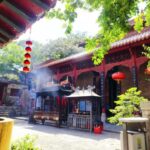
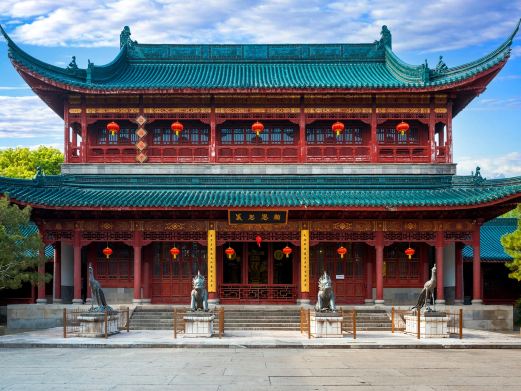
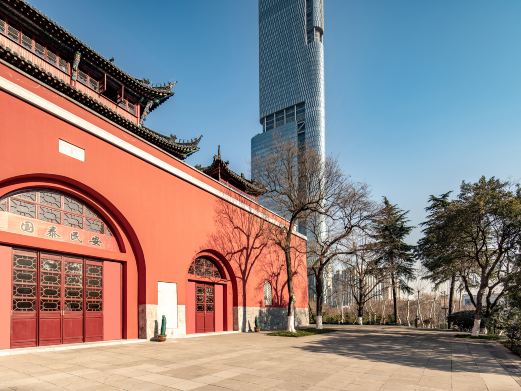
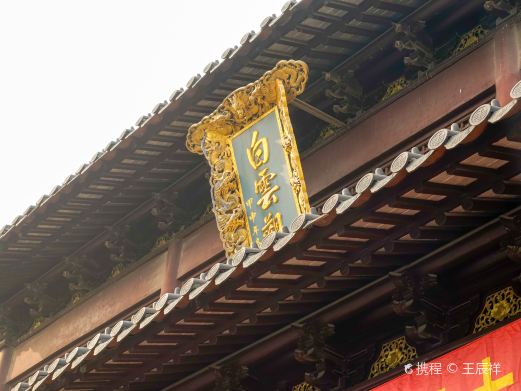
The Taiqing Palace in Shanghai, also known as Qinci Yangdian. According to legend, Qinci Yangdian is the palace for sacrificing the Great Emperor Dongyue (the god of Mount Tai) granted by the emperor in the Tang Dynasty. It is one of the early Taoist temples in the Shanghai area. This Taoist temple has prosperous incense. It is said that making wishes and praying for blessings here are even more effective than Longhua Temple and Jade Buddha Temple. The Taiqing Palace is mainly composed of buildings such as the gate tower, Dongyue Hall, Sanqing Hall, Sutra Depository (Lao Jun Hall), and Merit Hall. Although the Taoist temple is not large and most of the halls and pavilions are built in modern times, the buildings in the temple are very magnificent. After donating 5 yuan for incense tickets when entering the temple, two sticks of incense will be given for worship. On the first and fifteenth day of each month or other Taoist festivals, believers gather in the temple, which is very lively. On the 28th day of the third lunar month, the birthday of the Great Emperor Dongyue, the ‘Lotus Boat Festival’ will be held. Dongyue Hall is a Ming Dynasty building with exquisite carvings inside. Under the eaves of the hall is the plaque of ‘Qinci Yangdian’ written by the famous calligrapher Aisin Gioro Yuyan. This hall mainly enshrines: the Great Emperor Dongyue, Bixia Yuanjun, and Bingling Gong (the crown prince of Dongyue). The east and west wing rooms in front of the hall are two-story ancient buildings with corridors. The side halls in front of the downstairs respectively enshrine the Ten Kings of Hell, and the wing rooms respectively enshrine the Sixteen Departments. The back main hall is the Sanqing Hall, which is a modern all-brick and wood structure building. It enshrines the Taoist deities ‘Sanqing’, namely the Primordial Heavenly Lord, Lingbao Heavenly Lord, and Moral Heavenly Lord statues. The statues are tall and majestic. The east and west side halls mainly enshrine: Ancestral Heavenly Master, Three Officials Great Emperor, Emperor Guan Sheng, Cihang Taoist, Lu Zu and local gods. The Sutra Depository has four floors. The ground floor is used as a scripture hall. The second floor is a Taoist library open to society and believers. It mainly displays modern and contemporary Taoist classics, works and Taoist cultural books. The third floor is the Sutra Depository, which treasures important Taoist classics and displays important Taoist documents and cultural relics of past dynasties. The fourth floor is Lao Jun Hall, which enshrines the treasure of the temple – a ten-thousand-year-old rosewood carved statue of Lao Jun. To the east of the Sutra Depository is the Taoist culture stele corridor, where you can enjoy many Taoist calligraphy and paintings by famous people. Among them are extremely precious handwritten copies of ‘The Great Compendium of Shangqing Lingbao Salvation Scriptures’ and vivid wall paintings of the Peach Blossom Festival.
Opening hours: Open all year round from 08:00 to 16:30. The specific opening hours are subject to the announcements of the scenic spot.Taiqing Palace
The Taiqing Palace in Shanghai, also known as Qinci Yangdian. According to legend, Qinci Yangdian is[...]