Mentioned briefly in ‘The Sword Stained with Royal Blood,’ the story of the friendly relations between the Kingdom of Brunei and the Ming Dynasty, the king’s visit to China, and his sudden death, is based on the true story of the Brunei King’s tomb and its historical context. The Royal Tomb of the Brunei King is the tomb of the Brunei king from the early 15th century (today known as Brunei), constructed during the Yongle period of the Ming Dynasty.
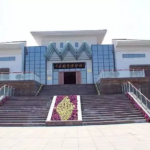
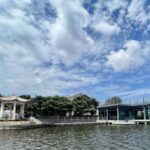
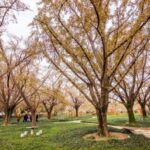
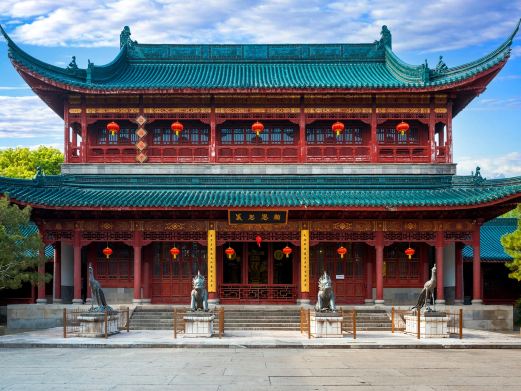
It is one of the two foreign royal tombs in China, the other being the Royal Tomb of the Sulu King in Dezhou, Shandong. This Brunei king was a great admirer of China. Emperor Chengzu, impressed by his rich tributes, granted him a seal of office. The king, overjoyed, came to express his gratitude but unfortunately contracted an illness and died in a foreign land. He left a will expressing his desire to be buried here, and the emperor chose a location outside the Nanjing’s southern suburb, near the Ande Gate, at Shi Zi Gang. The scenic area consists of three parts: the tomb area of the Brunei King, the Brunei Cultural Garden, and the service area. The tomb area still retains structures such as the sacrificial temple, stone statues along the spirit way, and the tomb mound, all in relatively good condition; broken tombstones have been re-erected, though many inscriptions have worn away. The ‘Brunei Cultural Garden’ features facilities such as the China-Brunei Friendship Hall, Brunei Water Garden, water pavilion, small street, maze, and wind-sending pavilion. The Friendship Hall regularly displays photos and artifacts of the historical exchanges between China and Brunei. Open daily from January 1st to December 31st, 08:30 to 17:00.The Royal Tomb of the Brunei King
Mentioned briefly in ‘The Sword Stained with Royal Blood,’ the story of the friendly rel[...]