
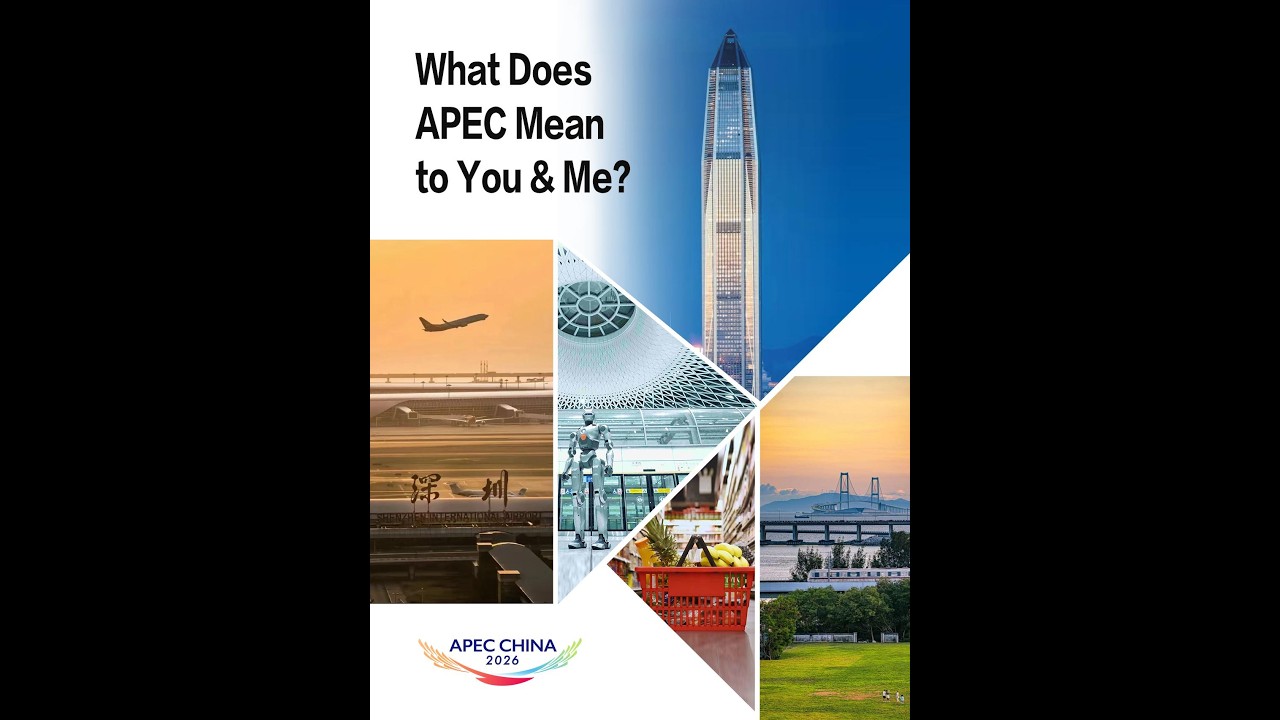
When a Pacific city gears up to host a summit — motorcades, banners, leaders arriving in dark sedans — the natural reflex of most people is to change the channel. The three-minute film at the top of this page, produced by New China TV as Shenzhen prepares to host this year’s APEC Economic Leaders’ Meeting, starts from the opposite instinct. Its title is a genuinely good question: what does APEC mean to you and me? Not to foreign ministries, not to chief executives — to the person watching, whose life is supposed to be somewhere at the end of all that diplomacy. The answer, the video argues, is more than you would think.
What APEC Actually Is
Strip away the ceremony and APEC — the Asia-Pacific Economic Cooperation forum — is the region’s largest standing conversation about trade. Founded in 1989, it gathers 21 member economies around the Pacific rim, from the United States and China to Japan, Australia, the ASEAN nations and the economies of Latin America. Together they account for roughly three-fifths of global output and about half of world trade — numbers large enough that when APEC sneezes, the world economy catches a cold. APEC is not a treaty organization; it decides nothing by force of law. It works by consensus and peer pressure, by persuading twenty-one governments that lowering walls is better than raising them. That softness is also its strength: it keeps talking when harder negotiations stall.
The Tariff in Your Shopping Cart
The most direct line from summit to sofa runs through prices. When the video promises “lower tariffs,” it is describing the driest possible mechanism with the warmest possible consequence. A tariff is a tax paid at the border, and taxes at the border end up in price tags on shelves. In the decades since APEC’s founding, average tariffs across the region have fallen from double digits to the low single digits — one of the quietest, largest wealth transfers from governments to shoppers ever conducted. The phone in your pocket, the coffee in your kitchen and the sweater on your back each crossed Pacific borders at a fraction of the cost they would have carried in 1989. That is what a “trade framework” looks like when it lands in a shopping cart.