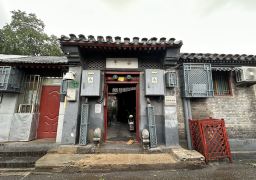
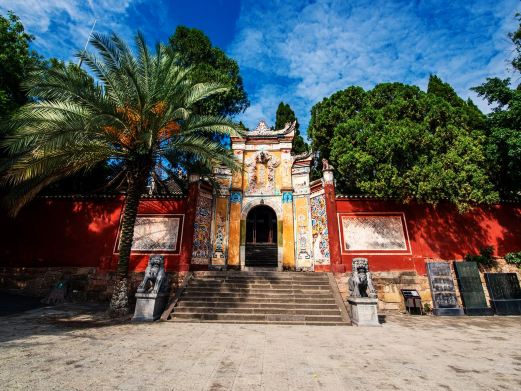
Nanshan, formerly known as Guanghua Mountain, is located 2 kilometers south of Longgang Town, Dazu County, with an altitude of 514 meters. The statues were carved from 1131 to 1162 AD (Shaoxing period of the Southern Song Dynasty). The cliff surface is 86 meters long and 3.5 to 10.2 meters high, and is numbered as No. 15 in total. There are 5 niches and caves for statues, mainly with Taoist themes such as the Ancient Sanqing Cave, the Niche of Empress Houtu, and the Dragon Cave. Among the Dazu Stone Carvings, the Taoist stone carvings from the 11th to 13th centuries are the ones with the largest number, the most concentration, and the most complete reflection of the divine system (immortal system). There are 5 well-preserved ones, with Nanshan being the most prominent. For example, in the No. 5 Ancient Sanqing Cave, there are a total of 421 statues carved, mainly with the high Taoist deities ‘Sanqing’, accompanied by ‘Four Sovereigns’ and a group of deities such as Empress Dowager and Queen Mother, vividly reflecting the historical fact that in the 12th century AD, Taoism had evolved from the early worship of Laojun and the ‘Three Officials’ to the ‘Sanqing’ and ‘Four Sovereigns’ belief with clear divine systems and hierarchies. Among the Taoist grottoes in the Song Dynasty in China, this cave is the most exquisitely carved; in terms of content, it is a complete and systematic reflection of the Taoist gods in the Song Dynasty. The Ancient Sanqing Cave has extremely high religious, historical, and artistic value. There are 28 inscriptions and colophons on Nanshan. Among them, the inscription of He Guangzhen’s Farewell to Prince Meng Ying in 1250 AD records the basic social and political history of eastern Sichuan after being attacked and plundered by the Mongolian army in the middle of the 13th century, preserving many precious first-hand historical materials and having important values of ‘proving history with inscriptions’, ‘supplementing history with inscriptions’, and ‘dating with inscriptions’. Opening hours: Open all year round from 09:00 to 17:00.
Nanshan Stone Carvings
Nanshan, formerly known as Guanghua Mountain, is located 2 kilometers south of Longgang Town, Dazu C[...]