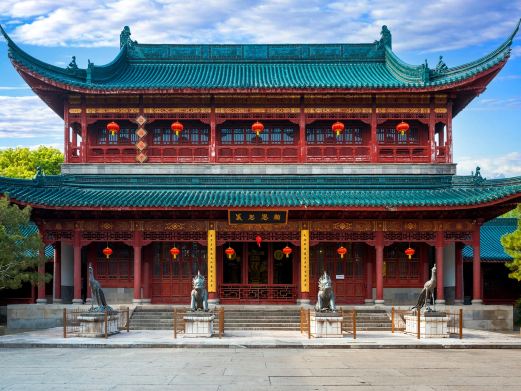
In the fifth year of the Yongle era (1407 AD), after Zheng He’s first successful voyage to the Western Seas, Emperor Zhu Di of the Ming Dynasty, in gratitude for the protection of Tian Fei for safe voyages, ordered the construction of the ‘Dragon River Tian Fei Palace’ at the foot of Lion Mountain. In the fourteenth year of the Yongle era (1416 AD), Zhu Di inscribed the ‘Imperially Commissioned Hongren Universal Salvation Tian Fei Palace Stele’ for the palace.
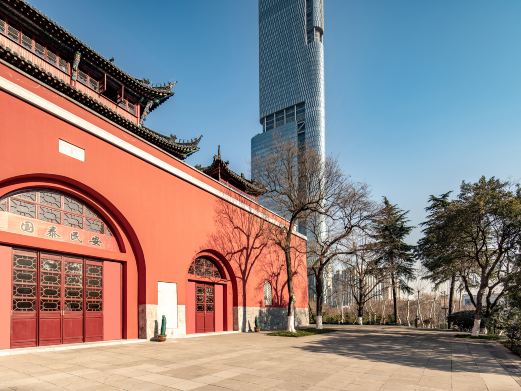
Records indicate that the Tian Fei Palace comprised ‘seventy-nine halls and chambers, with surrounding walls measuring over one hundred and eighty-one zhang’. After the Xianfeng period of the Qing Dynasty, the palace suffered repeated damages, and its former grandeur was no longer present. In the winter of 1937, when the Japanese forces occupied Nanjing, the Tian Fei Palace was completely destroyed by war, leaving only the stele. During the expansion of the ‘Jinghai Temple site’ in 1996, the stele was moved inside the temple. To commemorate the 600th anniversary of Zheng He’s voyages to the Western Seas, the Tian Fei Palace in Nanjing was reconstructed by the end of 2004, restoring the grandeur of the Ming Dynasty’s Dragon River Tian Fei Palace and becoming a sacred site for people from all over the world to pray for blessings. It is open all year round from 8:00 to 17:00, with specific operating conditions subject to daily opening status.Tian Fei Palace
In the fifth year of the Yongle era (1407 AD), after Zheng He’s first successful voyage to the[...]