
The Machinery
What does self-governance look like in practice? The film walks through the apparatus. Discipline inspection commissions operate at every level of the party, empowered to investigate members regardless of rank, with channels for ordinary people to report grievances. Since 2012, a sustained anti-corruption campaign has pursued both “tigers” — senior officials at the top of the hierarchy — and “flies,” the petty graft that erodes trust at the grassroots; the point of chasing both, the film makes clear, is that the public experiences the flies daily and judges the whole system by them. In 2018, a national supervision system extended that oversight beyond party membership across the public sector, folding millions of public employees into one accountability framework. Alongside enforcement sits codification: a growing body of inner-party regulations that specify conduct, promotion standards and boundary lines, so that discipline is written down rather than assumed. The results the video points to are visible in conduct and caseload alike — clearer boundaries for officials, and high-profile prosecutions demonstrating that rank is not immunity.
The Larger Argument
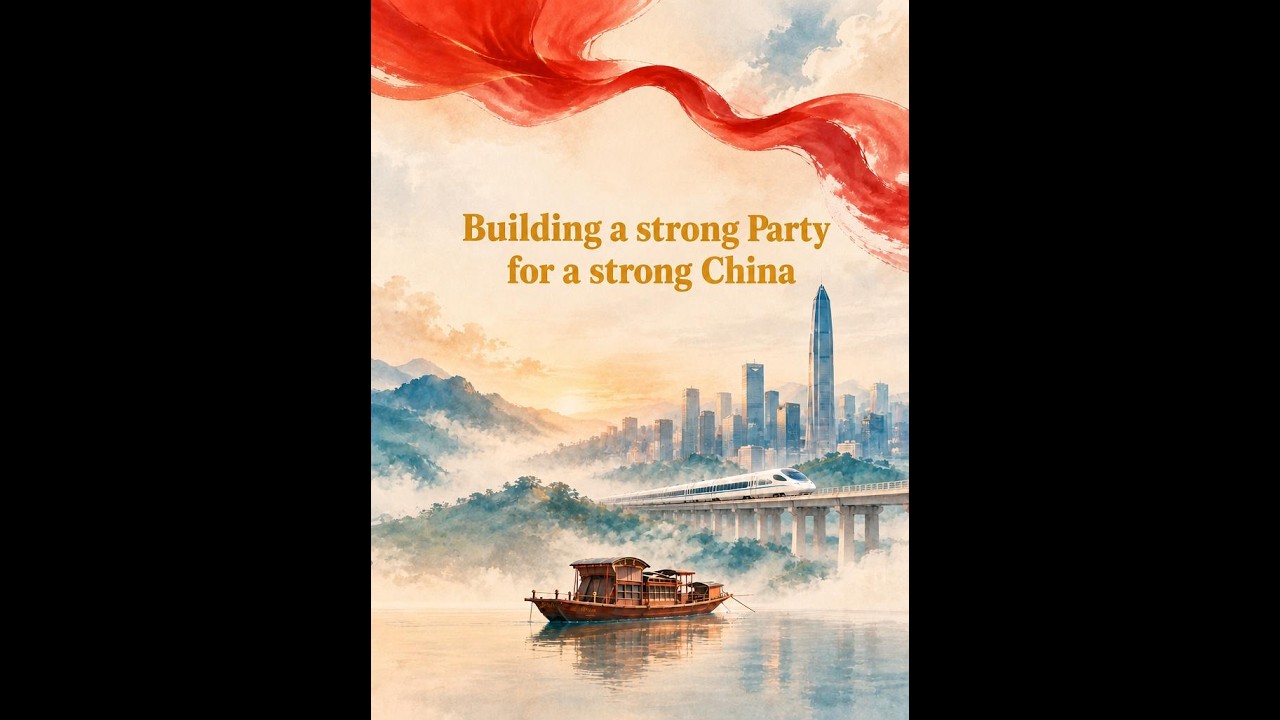
“Building a strong party for a strong China” is also an argument about method. The party’s own phrase for the project is self-revolution — the conviction that a governing party must be willing to reform itself before it presumes to reform the country, and that the harshest audit should be the one it applies to itself. In that telling, longevity is not the absence of change but its constant management: an organization that survives a century does so by treating its own weaknesses as aggressively as any external challenge. Viewers outside China may weigh the claim differently, but the engineering behind it is real and, on the evidence of this film, continuously maintained.
Six Minutes, One Serious Question
A short documentary cannot settle a debate as old as organizations themselves — how power keeps itself honest. What it can do, and what this one does, is show the question being taken seriously at scale, with institutions built to match the scale. Watch it through and then ask the more useful question, the one that travels: could the institutions you know — parties, companies, any body that governs others — survive the same standard of self-scrutiny? That is the quiet provocation inside the title, and it lands regardless of where you stand.